Friday, June 3, 2011
Weekly hour log for zooniverse 8
On Tuesday, 5/31, I spent an hour working on the Solar Stormwatch Project. On Thursday, 6/2, I spent an hour working on the Solar Stormwatch Project again. Then on Friday I spent the class period working on the Galaxy Zoo:Mergers Project. So I spent a total of 3 hours working on Zooniverse this week.

Wednesday, June 1, 2011
weekly hour log for zooniverse 7
On Wednesday, 5/25, I worked on the Planet Hunters Project for an hour. On Thursday, 5/26, I worked on the Planet Hunters Project again for an hour. Then on Friday, 5/27, I worked on the Old Weather Project for the last half of the class period. So I spent a total of 2.5 hours on zooniverse this week.
Friday, May 20, 2011
Weekly hour log for zooniverse 6
On Monday, 5/16, I worked on the Galaxy Zoo: Supernovae Project on zooniverse in class. On Wednesday, 5/18, I worked on the Galaxy Zoo: Supernovae Project again at home for an hour. The on Friday, 5/20, I worked on the Old Weather Project for half the class period. So I spent a total of 2.5 hours on zooniverse this week.
APOD 4.8

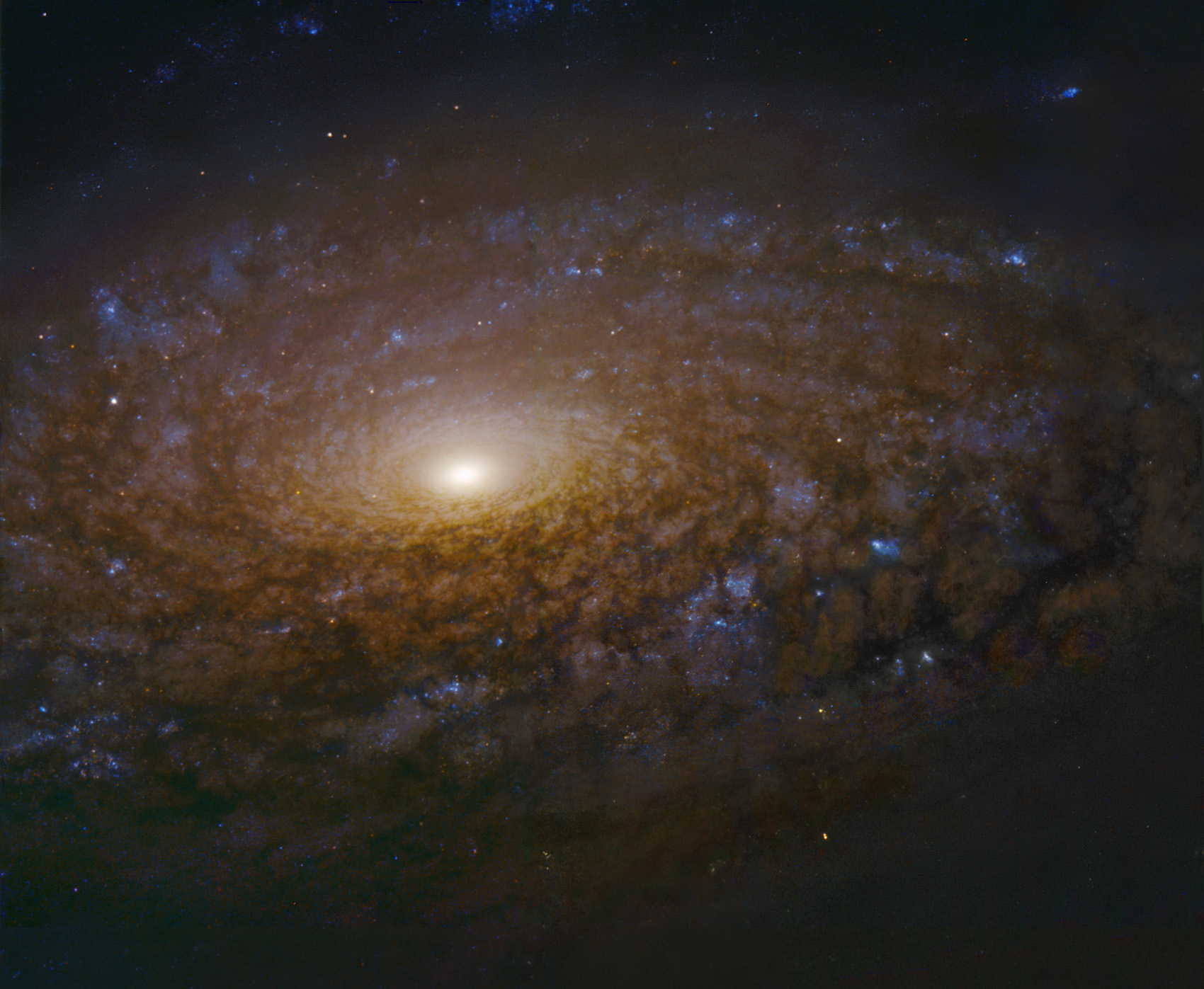
This is a photo of a dusty island universe and is one of the brightest spiral galaxies in planet Earth's sky. NGC 253 is only 13 million light-years away, and is the largest member of the Sculptor Group of galaxies and is neighbor to our own local galaxy group. This is a five frame mosaic based on data assembled from the Hubble Legacy Archive. Beginning on the left near the galaxy's core, the image follows dust filaments, interstellar gas clouds, and even individual stars toward the galaxy's edge at the right. The vista spans nearly 50,000 light-years. The frame at the far right has been compressed slightly to bring into view an interacting pair of background galaxies. Designated a starburst galaxy because of its "frantic" star forming activity, NGC 253 features tendrils of dust rising from as galactic disk laced with young star forming regions. NGC 253 is also known to be a strong source of high-energy x-rays and gamma rays, likelydue to massive black holes near the galaxy's center.
Tuesday, May 17, 2011
Quarter 4 Astronomy Biography
"Grote Reber." Encyclopædia Britannica. Encyclopædia Britannica. Encyclopædia Britannica, 2011. 17 May. 2011.
Quarter Four Astronomy Biography
Grote Reber was born on December 22nd, 1911 in Chicago, Illinois. His father was Schuyler Colefax Reber and he owned a canning factory. His mother was Harriet Grote Reber and he had a younger brother named Schuyler Reber. His mother was a school teacher before marrying and she taught Edwin Hubble 7th and 8th grade science. Grote Reber attended Wheaton High School in Wheaton, Illinois. He then went to the BS Electrical Engineering University and the Illinois Institute of Technology. He graduated in 1933 with a degree in electrical engineering.
He was an amateur radio operator and worked for many radio manufacturers in Chicago from 1933 to 1947. He operated a ham radio station in his spare time. He learned of Karl Jansky’s work in 1933 regarding his discovery of radio waves from the Galaxy. This prompted him to teach himself astronomy after deciding this was the field he wanted to work in. He applied to Bell Labs, where Jansky was working, but this was during the peak of the Great Depression and there were no jobs available. In 1937 he constructed the world’s first radio telescope. It was made mostly out of sheet metal and was a 31-ft parabolic transit dish powered by an extension cord to his back yard. Until the end of World War II, he remained the world’s only radio astronomer. In 1938, his device picked up radio emissions from the Milky Way, which confirmed Jansky’s discovery. Reber had difficulty having his findings published because astronomers at the time knew too little about radio and radio engineers knew little about astronomy. His papers were finally published in Astrophysical Journal only after several, better educated, astronomers had visited his dish in Wheaton, Illinois. Reber refused a research appointment from Yerkes.
He then focused on making a radiofrequency sky map. He conducted the first thorough survey of radio waves across the sky and organized his data in maps showing the radio radiation of the Milky Way. He completed this in 1941 and extended it in 1943. In 1944, he became the first to detect radio emissions from the Andromeda galaxy and the sun. As his reputation grew, Reber became a professional scientist when he was hired at the National Bureau of Standards (now the National Institute of Standards of Technology) in 1947, to manage the agency’s first radio telescope. He wasn’t fond of the bureaucracy and quit within a few years. He ended up moving to Hawaii where he designed and built a rotating antenna to study the ionosphere. In the 1950s, he turned his focus to cosmic radio waves at very low frequencies, which can only penetrate the Earth’s ionosphere in certain areas and times of low solar activity. One area where these waves can reach the Earth is the Tasmanian region of Australia, so Reber relocated and continued his studies there until his death, with generally unrestricted grants from the Research Corporation. The standard theory of radio emissions from space was that they were due to black-body radiation, light (of which radio is a non-visible form) that is given off by all hot bodies. According to this theory, it would be expected that there would be considerably more high-energy light than low-energy, due to the presence of stars and other hot bodies. Reber demonstrated that the reverse was true, and that there was a considerable amount of low-energy radio signal. It was not until the 1950s that synchrotron radiation was offered as an explanation for these measurements. Reber sold his telescope to the National Bureau of Standards, and it was built on a turntable at their field station in Sterling, Virginia. Eventually the telescope made its way to NRAO in Green Bank, West Virginia. Reber supervised its reconstruction at that site and he also helped with a reconstruction of Jansky’s original telescope. He also conducted research in archeology, botany, electronics, and meteorology, and designed his own energy-efficient home and electric car. He died on December 20th, 2002 in Tasmania, Australia.
Monday, May 16, 2011
Weekly hour log for zooniverse 5
On Wednesday, 5/11, I worked on the Old Weather Project for an hour at home. On Thursday, 5/12, I worked on the Old Weather Project again at home for an hour. On Friday, 5/13, I worked on the Moon Zoo Project for the last half of the class period. So I spent a total of 2.5 hours on zooniverse this week.
Quarter 4 Astro Bio Sources
"Grote Reber." National Radio Astronomy Observatory (NRAO): Look Deeper. Web. 13 May 2011. <http://www.nrao.edu/whatisra/hist_reber.shtml>.
"Grote Reber." NNDB: Tracking the Entire World. Soylent Communications. Web. 13 May 2011. <http://www.nndb.com/people/090/000172571/>.
Dieckhoff, Kerby. "Grote Reber." Angelfire: Welcome to Angelfire. Web. 13 May 2011. <http://www.angelfire.com/scifi/concordiasci/reber/reber.html>.
"The Bruce Medalists: Grote Reber." SSU Department of Physics & Astronomy - Home. The Bruce Medalists. Web. 13 May 2011. <http://www.phys-astro.sonoma.edu/brucemedalists/reber/index.html>.
APOD 4.7
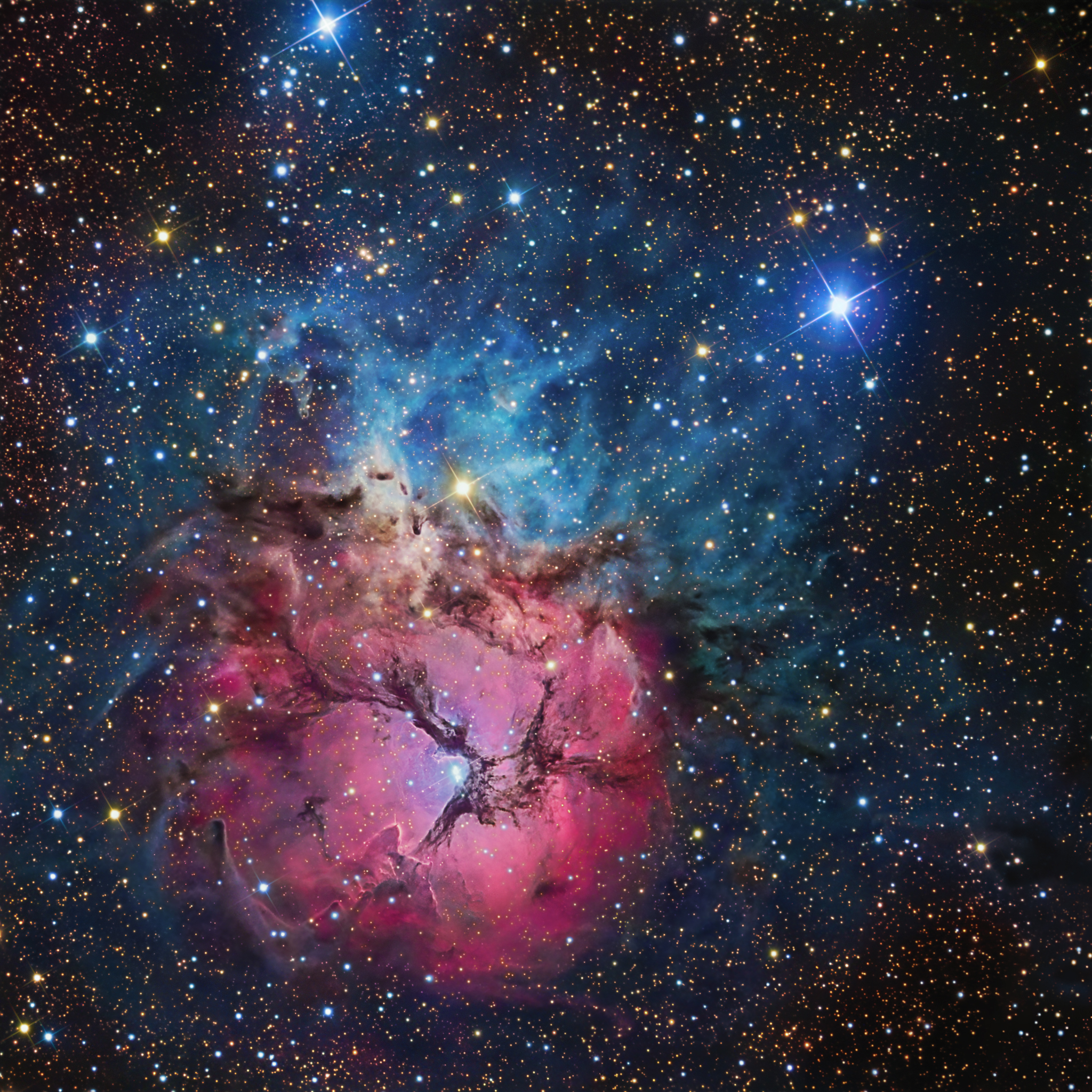
The Trifid Nebula is a cosmic study in colorful contrasts. It is also known as M20 and it lies about 5,000 light-years away toward the nebula rich constellation Sagittarius. A star forming region in the plane of our galaxy, the Trifid illustrates three different types of astronomical nebulae: red emission nebulae (dominated by light emitted by hydrogen atoms), blue reflection nebulae (produced by dust reflecting starlight), and dark nebulae (where dense dust clouds appear in silhouette). The bright red emission region, roughly separated into three party by obscuring, dark dust lanes, lends the Trifid its name. The red emission is also juxtaposed with the telltale blue haze of reflection nebulae. Pillars and jets sculpted by newborn stars, below and left of the emission nebula’s center, appear in Hubble Space Telescope close-up images of the region. The Trifid Nebula is about 40 light-years across.
Friday, May 6, 2011
Weekly hour log for zooniverse 4
On Tuesday, 5/3, I worked on the Solar Stormwatch project in class. Then on Thursday, 5/5, I continued to work on the Solar Stormwatch project at home for an hour. Then on Friday, 5/5, I worked on the Boulder Wars project for the last half of the class period. So I spent a total of 2.5 hours on zooniverse this week.
APOD 4.6

Friday, April 29, 2011
APOD 4.5

Monday, April 25, 2011
APOD 4.4
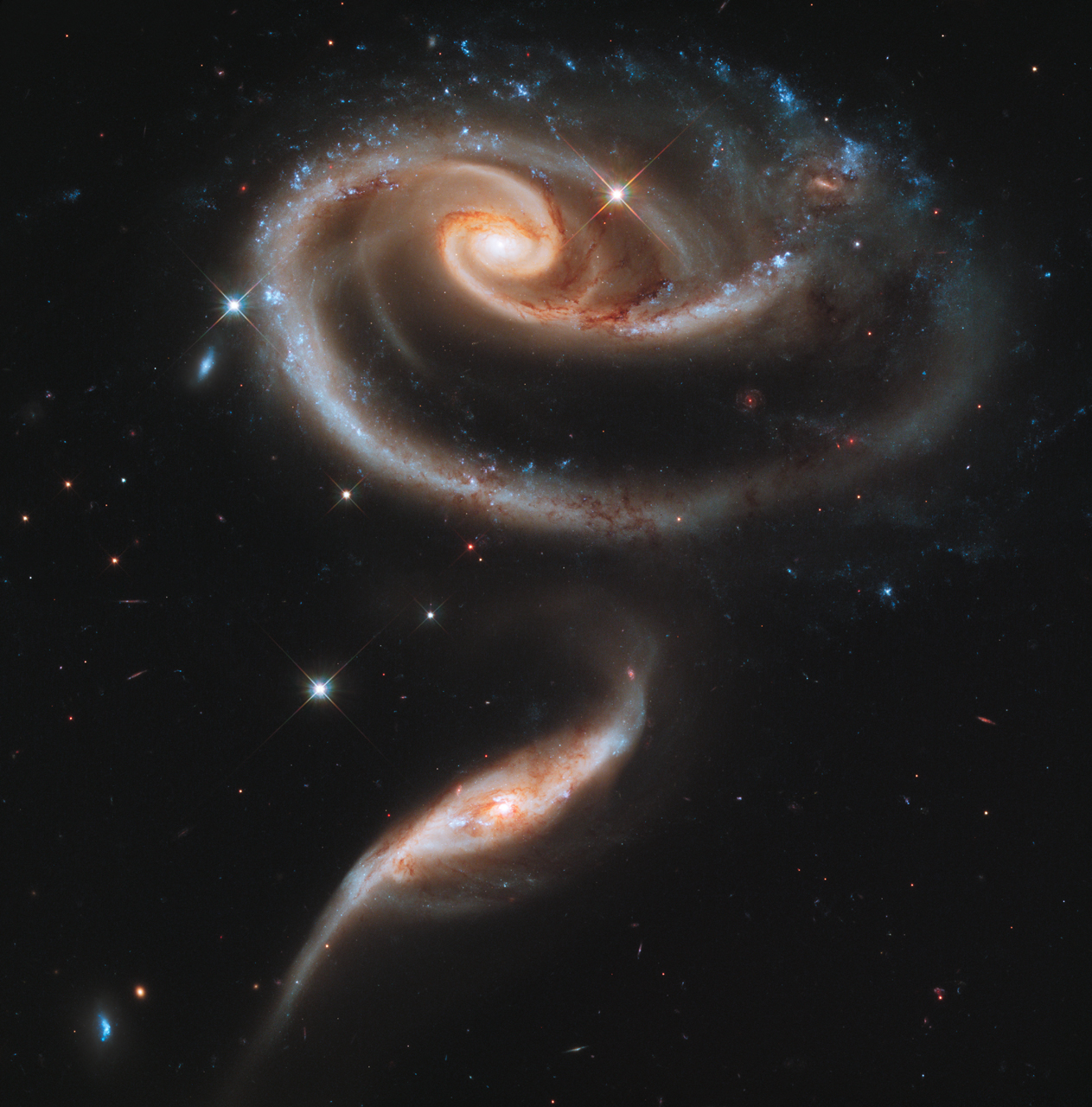
The spiky stars visible in the foreground of this cosmic image are within the Milky Way Galaxy. The two galaxies lie far beyond the Milky Way, at a distance of over 300 million light-years. Their distorted appearance is due to gravitational tides as the pair engage in close encounters. They are cataloged as Arp 273 (also as UGC 1810) and the galaxies do look peculiar but interacting galaxies are now understood to be common in the universe. The nearby large spiral Andromeda Galaxy is known to be some 2 million light-years away and approaching the Milky Way. Arp 273 may offer an analog of their far future encounter. Repeated galaxy encounters on a cosmic timescale can ultimately result in a merger into a single galaxy of stars. From our perspective, the bright cores of the Arp 273 galaxies are separated by only a little over 100,000 light-years.
Weekly hour log for Zooniverse 3
I worked on the Planet Hunters Project in class on Tuesday, 4/19. I worked on the Planet Hunters Project again at home for an hour on Thursday, 4/21. I spent a total of 2 hours this week on Zooniverse.
Tuesday, April 19, 2011
Weekly hour log for Zooniverse project 2
On Tuesday, 4/12, I spent the class period working on the Planet Hunters Project. On Thursday, 4.14, I spent the class period working on the Planet Hunters Project again. So this week I have a total of 2 hours.
Thursday, April 14, 2011
APOD 4.3

Friday, April 8, 2011
Weekly hour log for Zooniverse Project
On Tuesday, 4/5 , I spent the period working on the Moon Zoo Project. On Thursday, 4/7, I spent the period working on the Moon Zoo Project as well. Then on Friday, 4/8, I spent half of the class working on Boulder Wars (after I finished the Constellation Quiz and did my APOD). So I completed a total of 2.5 hours this week.
APOD 4.2
Thursday, March 31, 2011
APOD 4.1
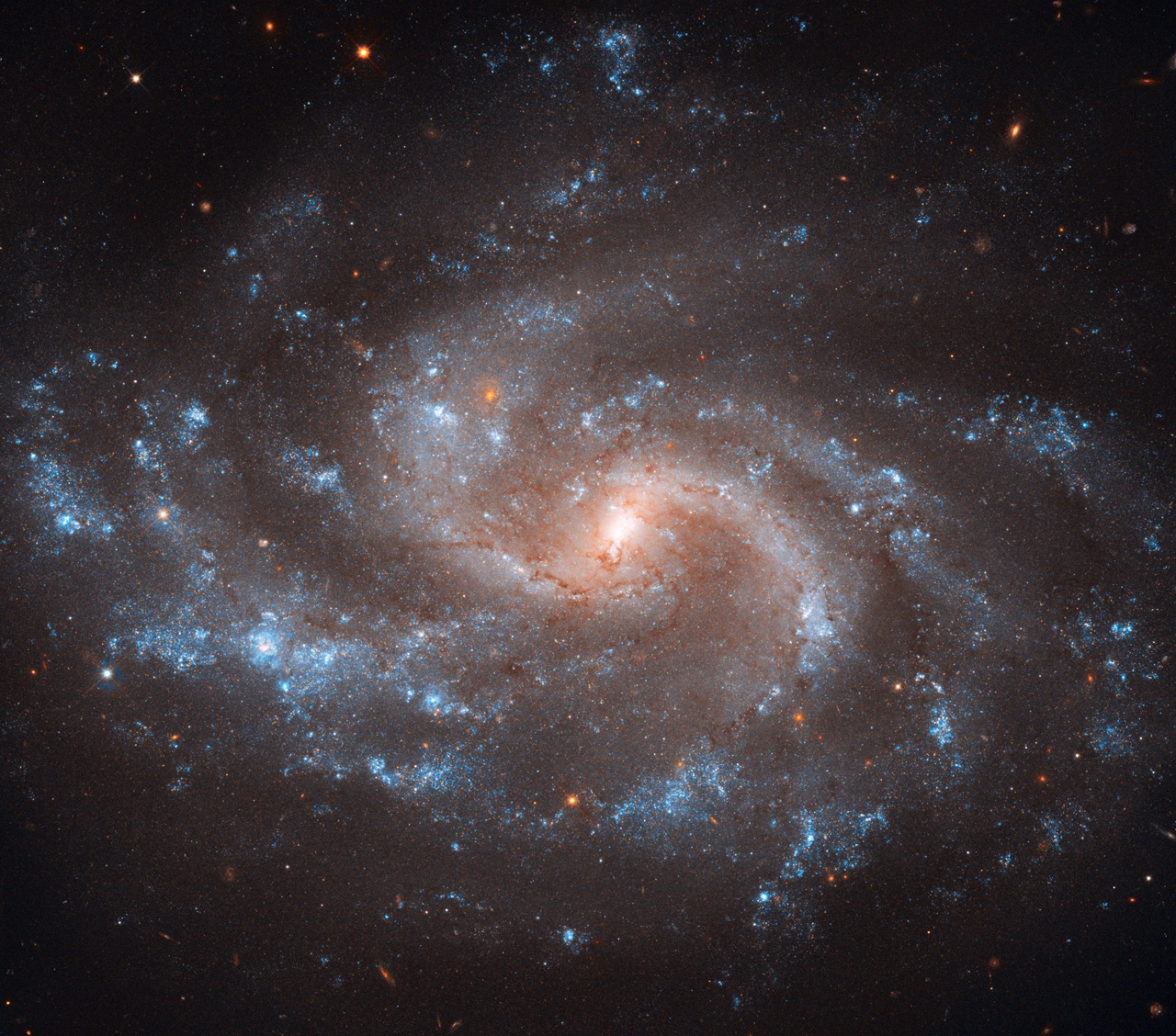
This is a photo of NGC 5584 and it is more than 50,000 light-years across and lies 72 million light-years away toward the constellation Virgo. This is an island universe and it has winding spiral arms that are filled with luminous young star clusters and dark dust lanes. It hosts some 250 Cepheid variable stars and a recent Type Ia supernova explosion, key objects for astronomical determinations. NGC 5584 is one of 8 galaxies used in a new study that includes additional Hubble Space Telescope observations to improve the measurement of Hubble's Constant (the expansion rate of the Universe). The results of the study allude to the theory that dark energy really is responsible for accelerating the expansion of the Universe, restricting models that try to explain the observed acceleration without the dark energy.
Wednesday, March 30, 2011
Quarter 3, Observation 5
I looked at the sky this morning, March 30th, around 6 A.M. when I woke up. I saw the Moon from my front yard and it was in the phase of a waning crescent. It was clear that this is one of the last couple of days before it turns in to a new moon because only a very slight portion of the crescent was still illuminated and visible. The rest of the sky was completely dark and the sky was relatively clear but I couldn't locate any stars or constellations.
Friday, March 18, 2011
APOD 3.8
Friday, March 4, 2011
APOD 3.7
Tuesday, March 1, 2011
APOD 3.6
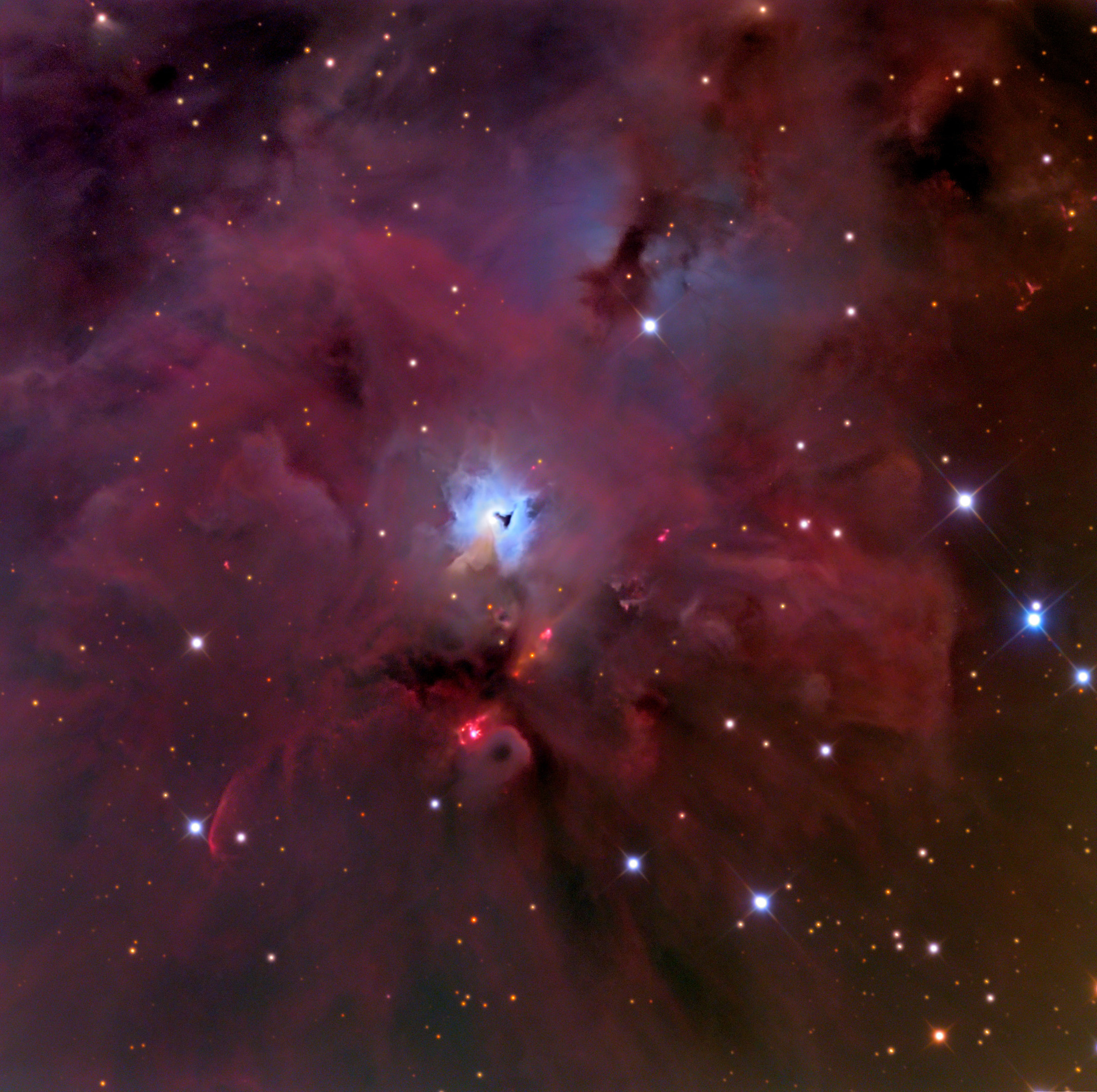
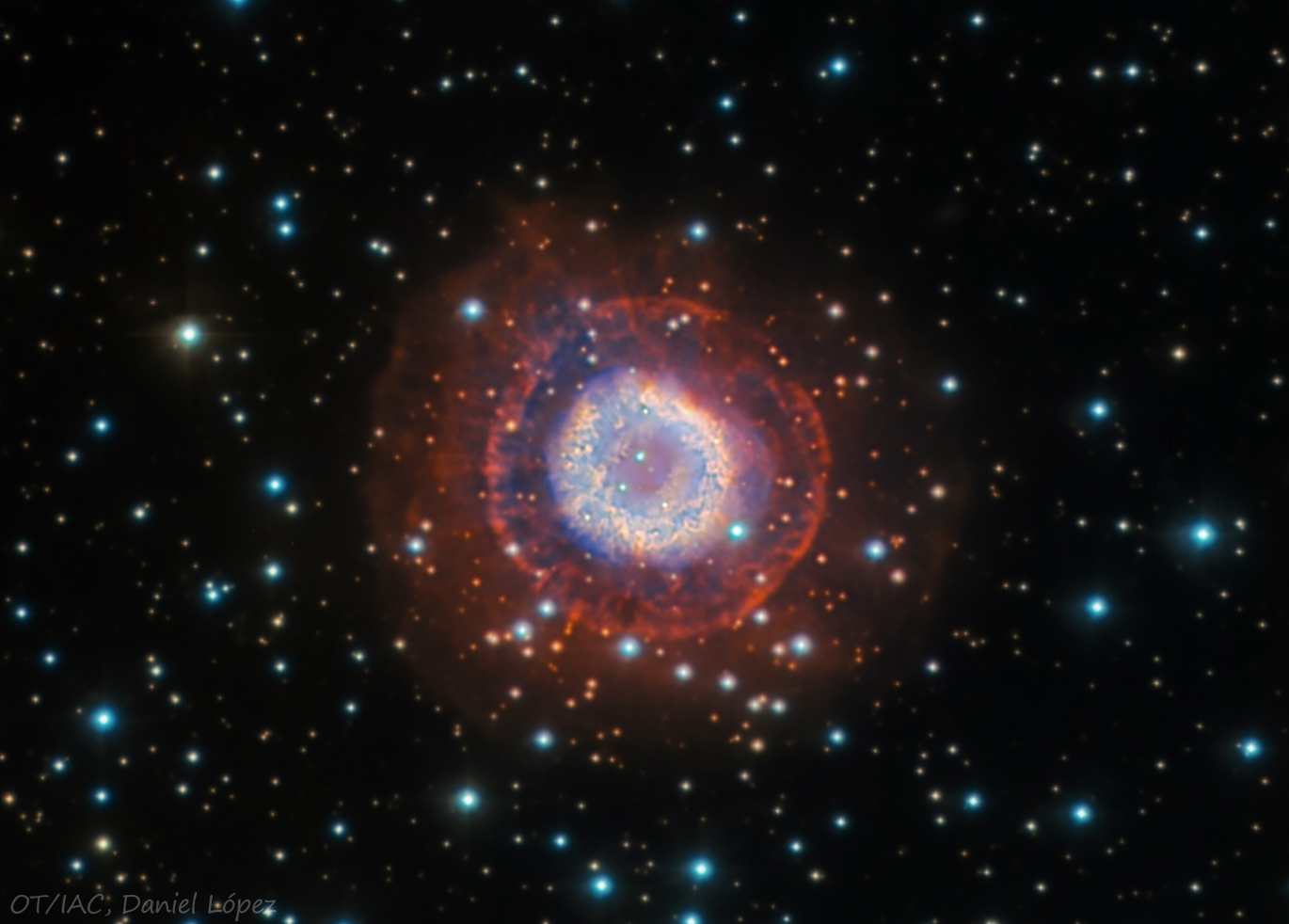
This is a photo of the bright blue reflection nebula, NGC 1999, and it lies south of the large star-forming Orion Nebula. NGC 1999's illumination is provided by the embedded variable star V380 Orionis. The nebula is marked with a dark sideways T-shape near center is this photo. This broad cosmic vista spans over 10 light-years. The dark shape was once assumed to be an obscuring dust cloud seen in silhouette against the bright reflection nebula. But it has been determined that the shape is likely the be a hole blown through the nebula itself by energetic young stars using infrared images. This region is filled with energetic young stars that produce jets and outflows that create luminous shock waves. The shock, Herbig-Haro (HH), appears bright red in this view that included HH1 and HH2 just below NGC 1999. The objects were named for astronomers George Herbig and Guillermo Haro. The stellar jets and outflows push through the surrounding material at speeds of hundreds of kilometers per second.
Thursday, February 24, 2011
Quarter 3 Astronomy Bio
Dictionary of Scientific Biography. C. Gillispie, editor. Charles Scribner's Son, publisher. 1981
Kendall, Phebe. "Maria Mitchell." Pine Tree Web Home Page. Web. 22 Feb. 2011. <http://www.pinetreeweb.com/maria-mitchell.htm>.
Quarter 3 Astronomer
Maria Mitchell was born on August 1, 1818 in Nantucket, Massachusetts. Her father was a member of the Quaker religion and he felt strongly that girls should receive education equal to that of boys. At sixteen, Maria was already a teaching assistant to a schoolmaster. At seventeen, she decided to open her own school. She rented a room and put an advertisement in the newspaper. But the school was closed when Maria took a job as the librarian of Nantucket’s Atheneum Library. Maria’s father built an observatory on his room and installed a brand new four inch telescope. He made star observations for the United States Coast Guard and Maria helped her father take these measurements.
Maria was very intelligent and even had the sky memorized. Her observation skills were also impeccable. One night in the Autumn of 1847, Maria looked at the sky through the telescope and saw a star five degrees above the North Star and she knew there hadn’t been a star there before. She thought that it might be a comet so she recorded its coordinates. When she checked again the next night, sure enough, it had moved and she knew it had to be a comet. Her father wrote a letter to Professor William Bond at Harvard University to tell him about Maria’s discovery. The king of Denmark had offered a gold medal to any person who discovers a comet seen only through a telescope. Therefore, Professor Bond submitted Maria’s name to the king. But Father Francesco de Vico of Rome had discovered the comet two days later than Maria and he had been awarded the prize before the news of Maria’s discovery had arrived in Europe. But one year later, it was decided that Maria deserved the award. The comet was named “Miss Mitchell’s Comet.”
Maria continued to work as a librarian but her fame was spreading. She was receiving letters of congratulations from scientists and tourists were coming to take a look at the miraculous woman astronomer. In 1848, she was voted as the first woman member of the American Academy of Arts and Sciences. The same happened with the Association for the Advancement of Science in 1850. In 1849, she took a job with the U.S. Nautical Almanac Office as a computer (the one who does the computations) of tables of positions of the planet Venus. She also started traveling to attend scientific meetings.
In 1856, a rich man named General Swift offered Maria the chance to accompany his daughter Prudence on a trip to the South and to Europe. Maria accepted the offer and took her almanac work with her. Together they went to New Orleans, then to London where Maria got to visit the Greenwich Observatory. Prudence returned to the United States but Maria decided to stay in Europe. She ventured to France on her own and then traveled to Rome with Nathaniel Hawthorne’s family. Her hopes of visiting the Vatican Observatory were dashed when she received the news that women were not admitted. She managed to eventually get special permission but was only granted the right to visit in the daytime. She was never able to look at the stars through the telescope at night. When she got home, she was given a new telescope bought with money raised for women for the first woman astronomer of the United States. She used it to study sunspots and other astronomical events.
In 1965, she became a professor of astronomy and director of the college observatory at the newly opened Vassar College in Poughkeepsie, New York. There, she had access to a twelve-inch telescope which was the third largest in the United States. She often extended an invitation to her students to come up to the observatory at night and watch meteor showers or other astronomical events. (Sounds a lot like you, Mr. Percival) Maria continues her own research in studying the surface features of Jupiter and Saturn. She was also interested in photographing stars. In 1869, she became the first woman elected to the American Philosophical Society. In 1873, she helped found the American Association for the Advancement if Women and served as its president from 1874 to 1876. In 1873, she attended the first meeting of the Women’s Congress. The Congress also hosted many women’s rights activists such as Elizabeth Cady Stanton, Susan B. Anthony, Lucy Stone, Dr. Elizabeth Blackwell, Antoinette Brown Blackwell, etc.
Maria retired from Vassar in 1888 because of her deteriorating health. She died on June 28, 1889 in Lynn, Massachusetts. The Maria Mitchell Association on Nantucket, founded in 1902, was developed by her friends and supporters after her death. She was elected to the Hall of Fame of Great Americans at New York University (now at Bronx Community College) in 1905. In 19954, she was elected to the National Women’s Hall of Fame in Seneca Falls, New York.
Tuesday, February 22, 2011
Quarter 3 observation 4
I observed the sky from my front yard on Saturday, February 19th at 9:30 pm. The sky was completely dark but no stars were visible. The moon was in the southeastern part of the sky and was in the full moon phase. The moon was really bright and looked white.
Quarter 3 observation 3
I came to the observation session at pine view on sunday night, february 20th. I looked through the telescopes and everything and used the binoculars to locate first magnitude stars such as algol, etc. We were also able to locate many constellations such as auriga, triangulum, perseus, orion, taurus, etc as well as the pleiades and hyades.
Friday, February 18, 2011
APOD 3.5
Thursday, February 17, 2011
Astro Bio Quarter 3 Sources
Bois, Danuta. "Maria Mitchell." Women's Biographies: Distinguished Women of Past and Present. 1996. Web. 17 Feb. 2011. <http://www.distinguishedwomen.com/biographies/mitchell.html.>
"Maria Mitchell." Female Ancestors - Find Female Ancestors. Web. 17 Feb. 2011. <http://female-ancestors.com/daughters/mitchell.htm>.
Wednesday, February 16, 2011
Quarter 3 observation 2
on friday february 4th I went out and observed the sky from my friends back yard. it was around 8 p.m. when i was observing and the sky was completely dark. I couldnt see the moon so it was in the new moon phase. I could see many stars and was even able to identify a few constellations.
Quarter 3 observation 1
on saturday january 29th I went out and observed the sky from my front yard at around 8 p.m. the phase of the moon was a waning crescent. I couldnt see many stars because there was still some fog lingering in the sky.
Friday, February 11, 2011
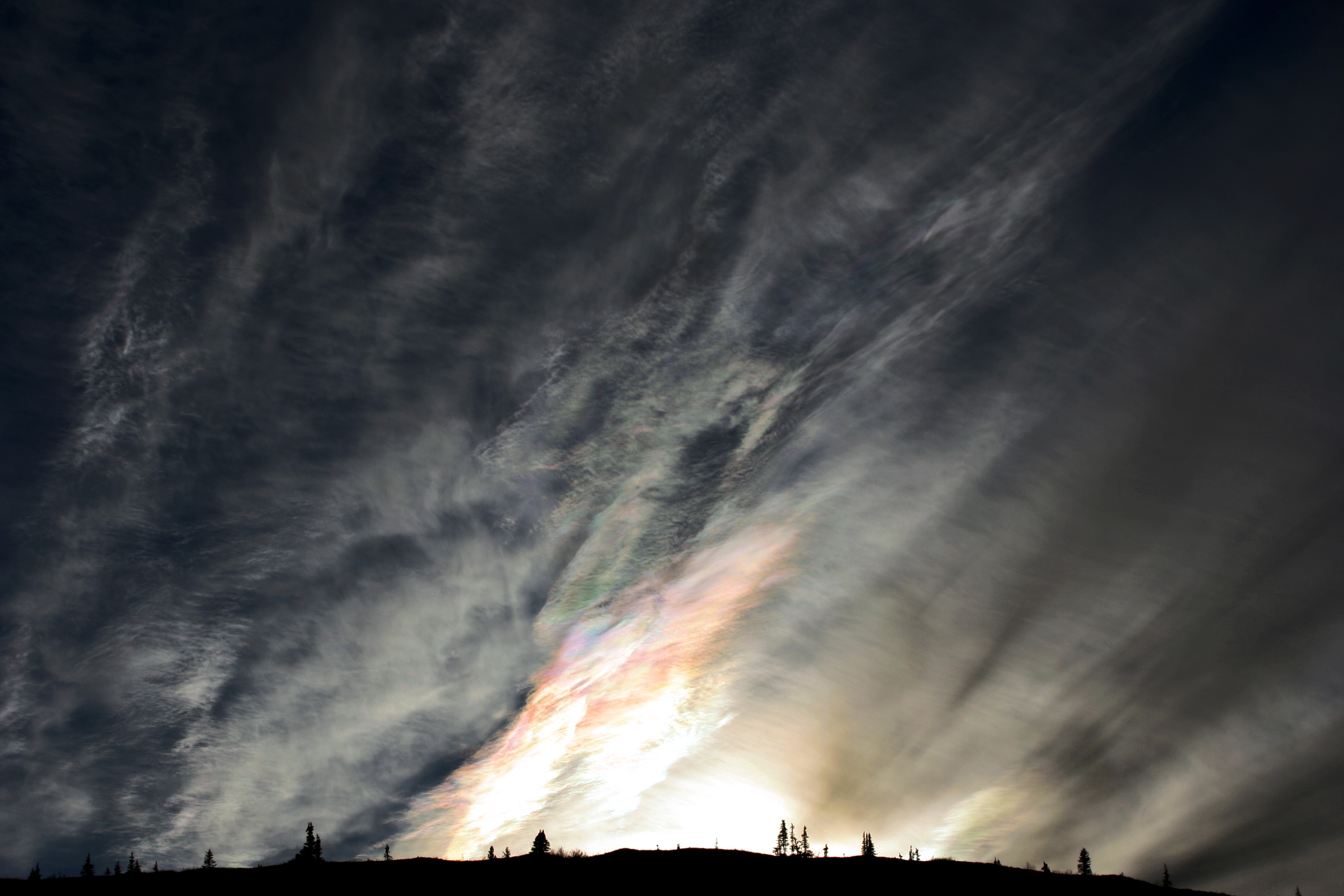
APOD 3.4
Friday, February 4, 2011
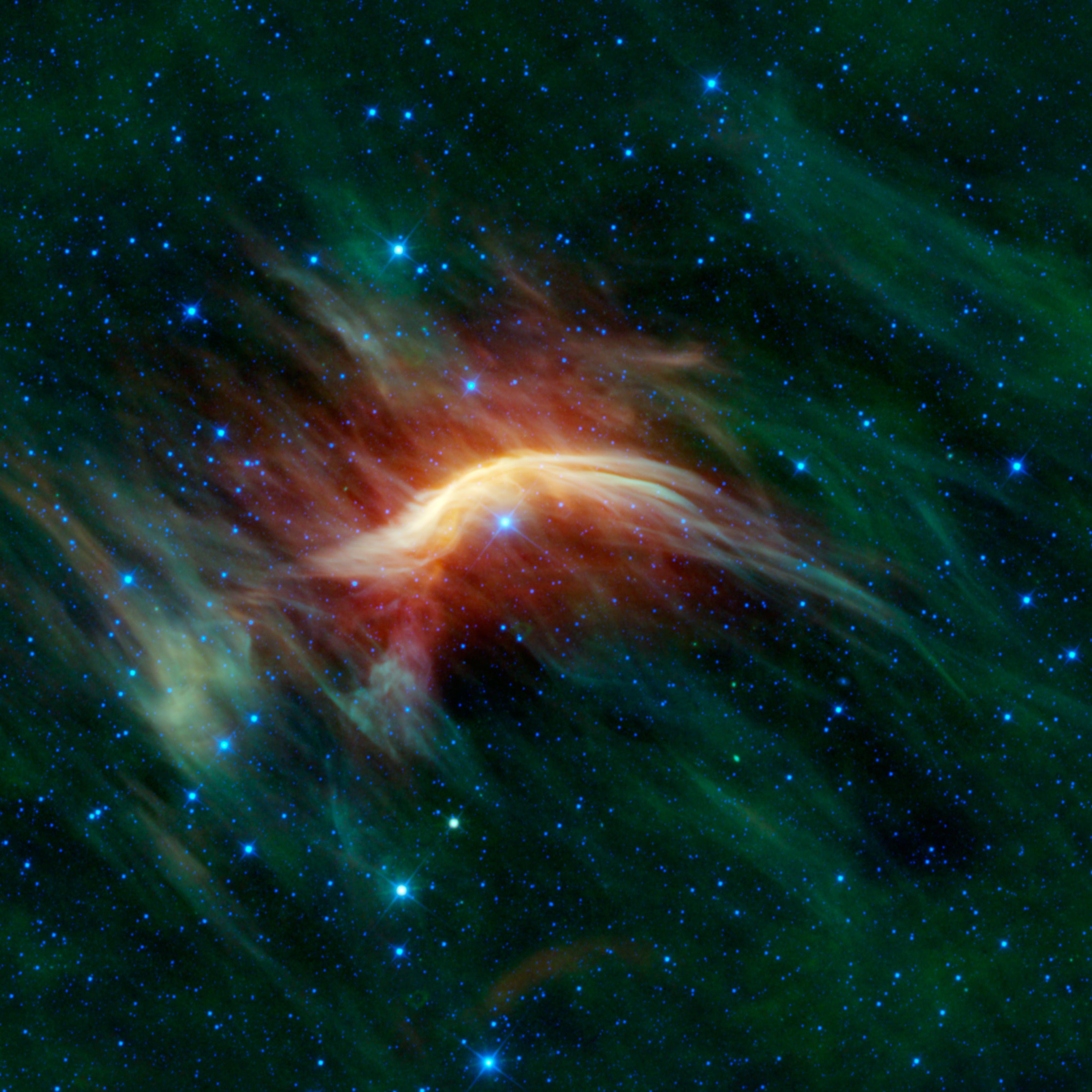
APOD 3.3
Friday, January 28, 2011
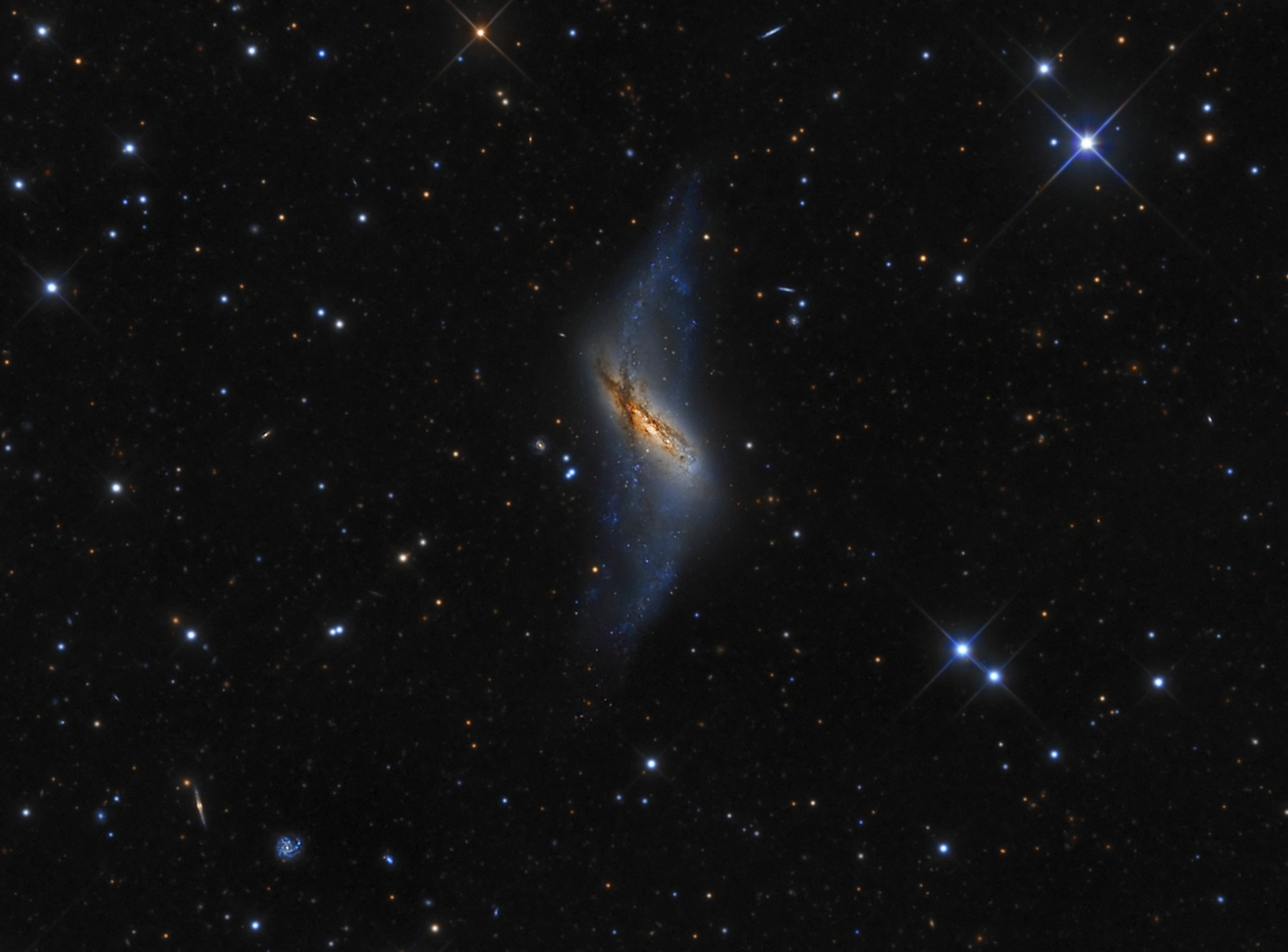
APOD 3.2
Friday, January 21, 2011
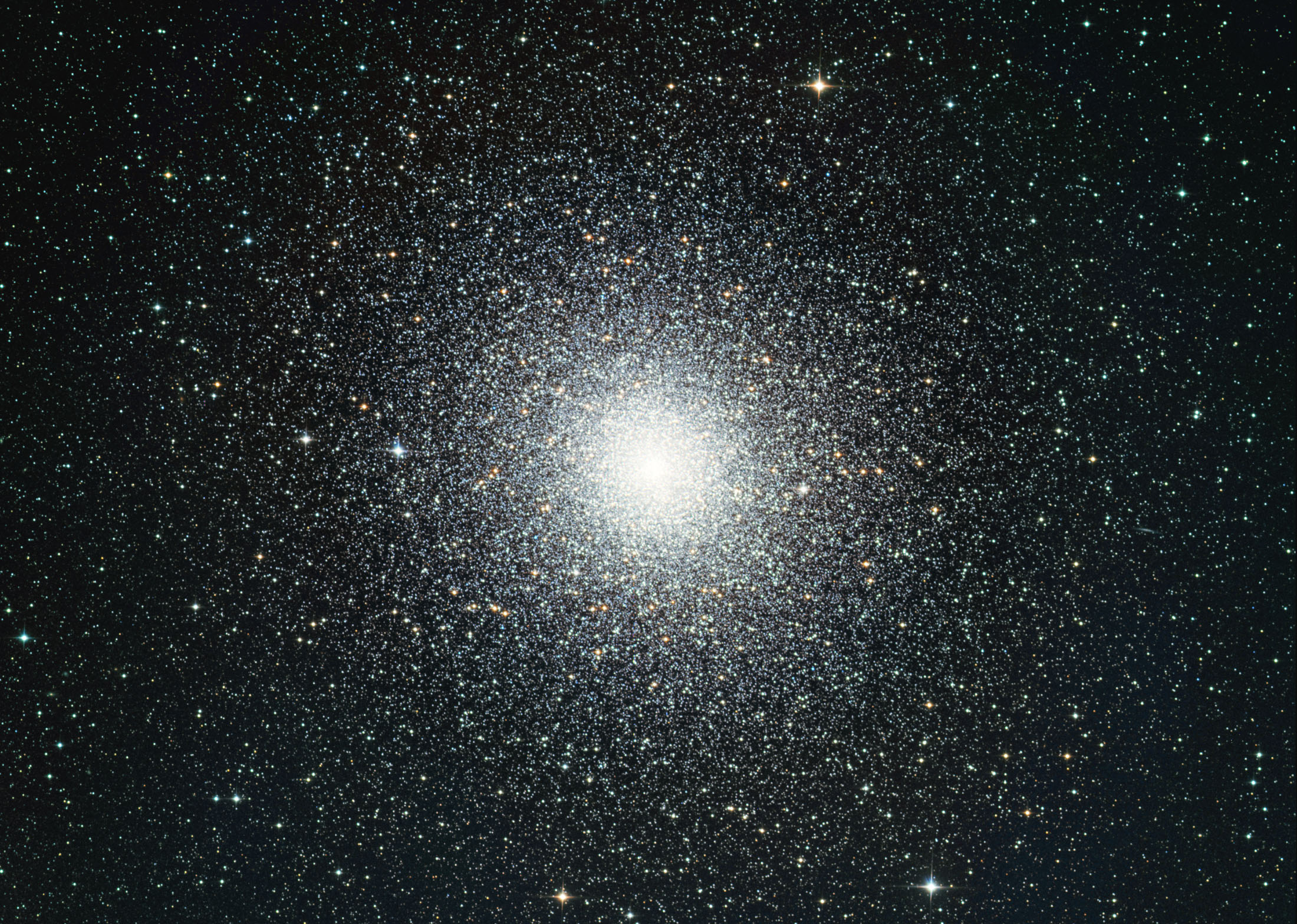
APOD 3.1
Wednesday, January 19, 2011
Lunar Eclipse Observation
I came to Pin View on December 20th, 2010 to view the lunar eclipse. I got there around 1 A.M. so I guess it was technically the 21st. I stayed and watched the whole thing. It was amazing to be able to see an entire cycle of the moon , which usually takes a moth, all in just a few hours.
Friday, January 14, 2011
APOD 2.8
Wednesday, January 12, 2011
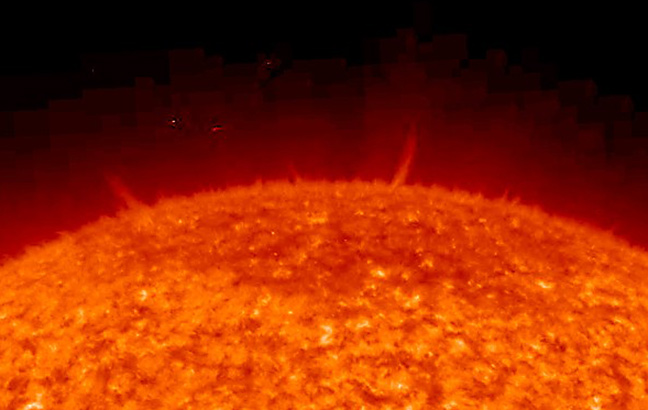
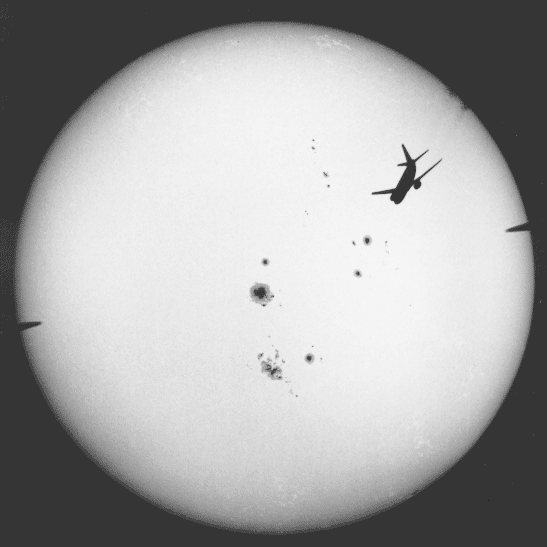
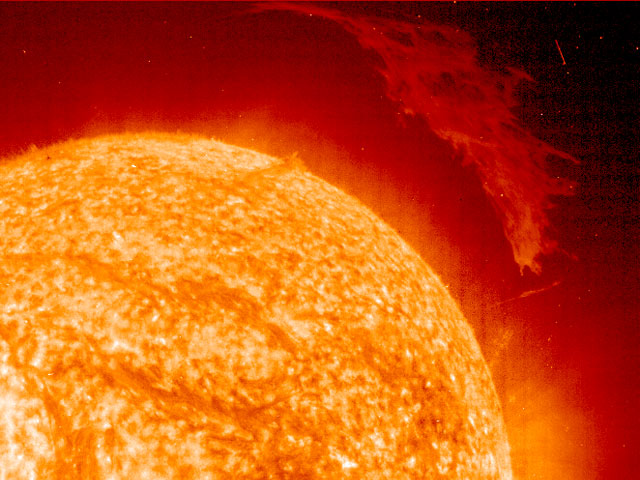
The Sun Class Activity
http://sohowww.nascom.nasa.gov/pickoftheweek/old/09aug2007/304spicules.jpg
http://www.tilmari.pp.fi/sunspot.jpg
http://physics.usc.edu/solar/images/910726.large.gif
http://apod.nasa.gov/apod/image/0403/sunprom2_soho.jpg
http://www.sustainabilityninja.com/wp-content/uploads/2009/07/solar-eclipse.jpg
http://s424.photobucket.com/albums/pp327/beyond50/Video%20Clips/?action=view¤t=Clip-SunandEarthRotating.mp4
http://www.tilmari.pp.fi/sunspot.jpg

http://physics.usc.edu/solar/images/910726.large.gif
http://apod.nasa.gov/apod/image/0403/sunprom2_soho.jpg
http://www.sustainabilityninja.com/wp-content/uploads/2009/07/solar-eclipse.jpg

http://s424.photobucket.com/albums/pp327/beyond50/Video%20Clips/?action=view¤t=Clip-SunandEarthRotating.mp4
Monday, January 10, 2011
Quarter 2 Astronomer Biography
Dictionary of Scientific Biography. C. Gillispie, editor. Charles Scribner's Son, publisher. 1981
Laplace presented his famous nebular hypothesis in 1796 in Exposition du systeme du monde, which looked upon the solar system as originating from the contracting and cooling of a large, flattened, and slowly rotating cloud of incandescent gas. Exposition du systeme du monde was written as a non-mathematical introduction to Laplace 's most important work Traité de Mécanique Céleste whose first volume appeared three years later. Laplace had discovered the invariability of planetary mean motions. In 1786 he had proved that the eccentricities and inclinations of planetary orbits to each other always remain small, constant, and self-correcting. These and many other of his earlier results formed the basis for his second work. Laplace became Count of the Empire in 1806 and he was named a marquis in 1817 after the restoration of the Bourbons. Laplace continued to apply his ideas of physics to other problems such as capillary action (1806-07), double refraction (1809), the velocity of sound (1816), the theory of heat, in particular the shape and rotation of the cooling Earth (1817-1820), and elastic fluids (1821). Laplace died on the morning of March 5th, 1827.
Quarter Two Astronomer Biography
Pierre Simon Laplace was born in Beumont-en-Auge , Normandy , France Beaumont-en-Auge Caen University University of Caen , Laplace realized that he was gifted in the area of mathematics and how much he loved the subject. This realization is accredited largely to two mathematics teachers at Caen
Laplace chose to leave Caen without his degree and went to Paris Paris Paris Leipzig Laplace was elected an adjoint in the Academie des Sciences. By the time he was elected, he had already read thirteen papers to the Academie in less than three years. In 1780, Laplace and the chemist Lavoisier applied quantitative methods to a comparison of living and nonliving systems, with the aid of an ice calorimeter that they had invented, showed respiration to be a form of combustion. In 1784, Laplace was appointed as the examiner at the Royal Artillery Corps. Laplace was promoted to a senior position in the Academie des Sciences in 1785. Laplace marries Marie-Charlotte de Courty de Romanges on May 15th, 1788. They had two children and their son, Charles-Emile, who was born in 1789, went on to a career in the military. Before the 1793 Reign of Terror, Laplace and his wife and two children left Paris and lived 50 km southeast of Paris Paris
Friday, January 7, 2011
APOD 2.7
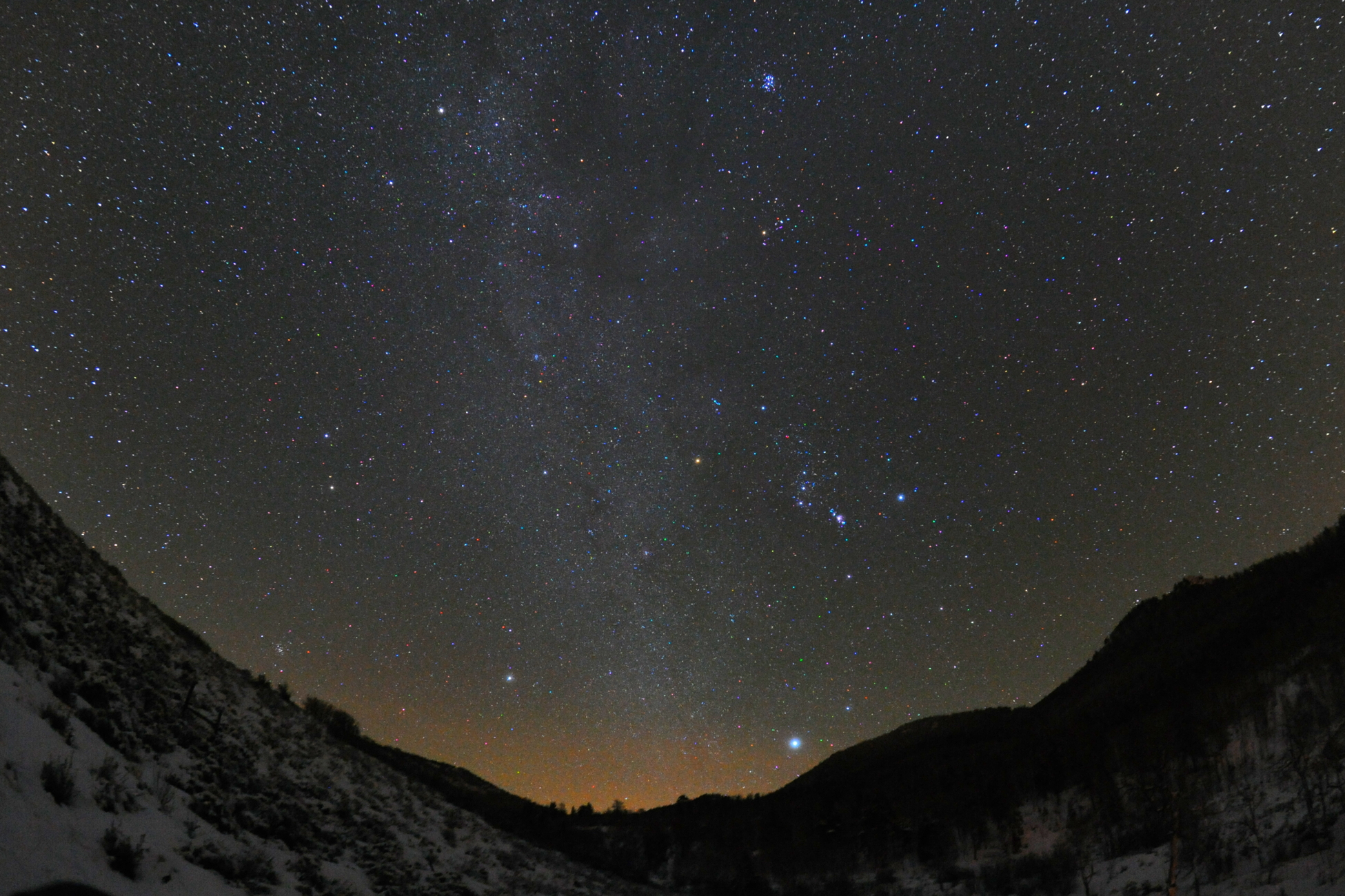
This is a photo of the Winter Hexagon. They say if you can find Orion in the sky, you will probably be able to locate the Winter Hexagon. The Winter Hexagon is composed of some of the brightest stars that are visible. They combine to form a large and easily spotted "pattern" in the winter sky located in Earth's northern hemisphere. These stars can usually be seen even in the inconducive to star watching bright night skies of a big city. This photo was taken in Stagecoach, Colorado. There are six stars in the Winter Hexagon: Aldebaran, Capella, Castor (and Pollux), Procyon, Rigel, and Sirius. In this photo, the band of the Milky Way Galaxy runs through the center of the Winter Hexagon, and the Pleiades open star cluster can be seen just above. The Winter Hexagon "asterism" takes over many constellations including Orion.
Thursday, January 6, 2011
Quarter 2 Astronomer Biography Sources
Ball, Rouse. "Pierre Simon Laplace (1749 - 1827)." TCD School of Mathematics. Web. 04 Jan. 2011. <http://www.maths.tcd.ie/pub/HistMath/People/Laplace/RouseBall/RB_Laplace.html.>
Robertson, E.F. "Laplace Biography." MacTutor History of Mathematics. School of Mathematics and Statistics. Web. 06 Jan. 2011. <http://www-history.mcs.st-and.ac.uk/Biographies/Laplace.html>.
"Pierre-Simon Laplace." NNDB: Tracking the Entire World. Soylent Communications. Web. 04 Jan. 2011. <http://www.nndb.com/people/871/000031778/>.
Subscribe to:
Comments (Atom)