This photo was taken by the robotic rover Opportunity on Mars. This photo shows yet another small crater discovered on Mars. It is called Intrepid Crater which is a 20-meter across impact basin a little larger than Nereus Crater that Opportunity discovered last year. This photo is said to be accurate in color but horizontally compressed to fit a wide angle panorama. Intrepid Crater was named after the lunar module Intrepid that carried Apollo 12 astronauts ot Earth's Moon 41 years ago last month. Peaks from the rim of large Endeavour Crater, visible on the horizon, lie beyond Intrepid Crater and past long patches of rusty. Scientists predict that Opportunity may reach Endeavour sometime next year if it can avoid ridged rocks and soft sand.
Friday, December 10, 2010
Thursday, December 2, 2010
APOD 2.5
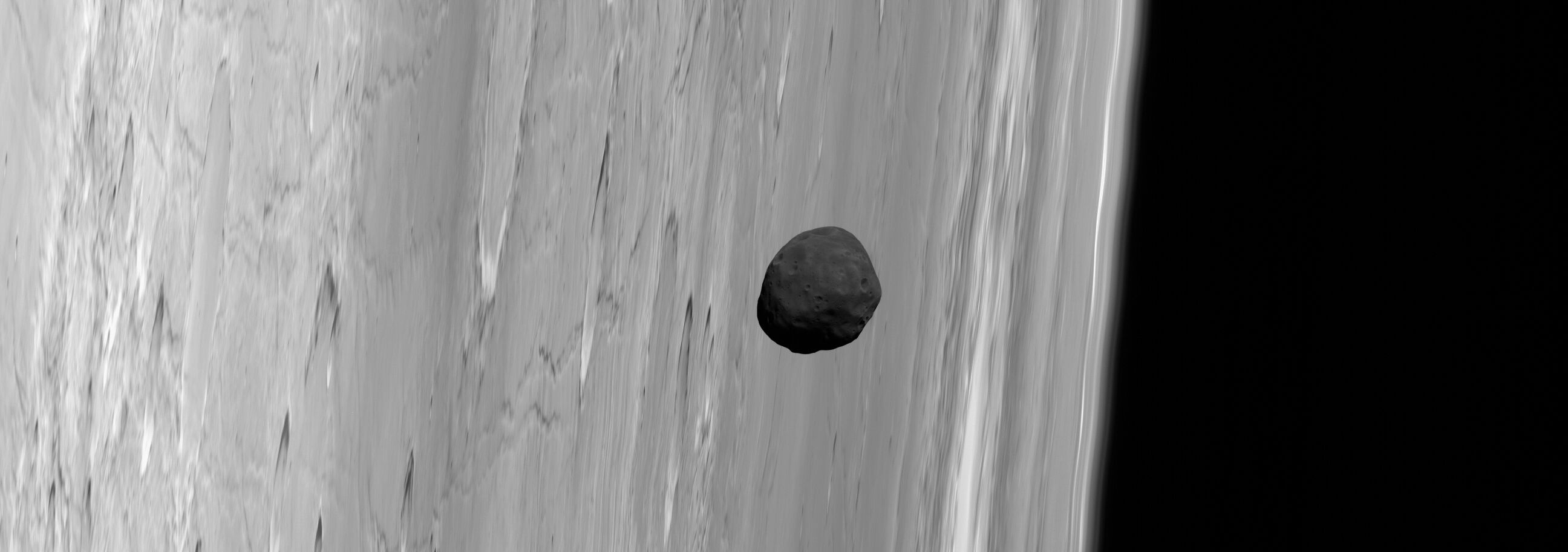
This is a photo of Phobos, the largest and innermost of Mars's two moons. It is the darkest moon in the Solar System. It has an unusual color and orbit allude to the possibility that it may be a captured asteroid composed of a mixture of ice and dark rock. This photo of Phobos was taken last month by the robot spacecraft Mars Express which is currently orbiting Mars. Phobos has many craters and is barren and its largest crater, Stickney, is located on the far side. Using photos like this one, it has been determined that Phobos is covered by about a meter of loose dust. Phobos has an unusual orbit because it is so close to Mars. From some places it appears to rise and set twice a day but from some places it is not visible at all. Phobos' orbit around Mars is chronically decaying and it is predicted to break-up with pieces falling on Mars in about 50 million years.
Friday, November 19, 2010
APOD 2.4
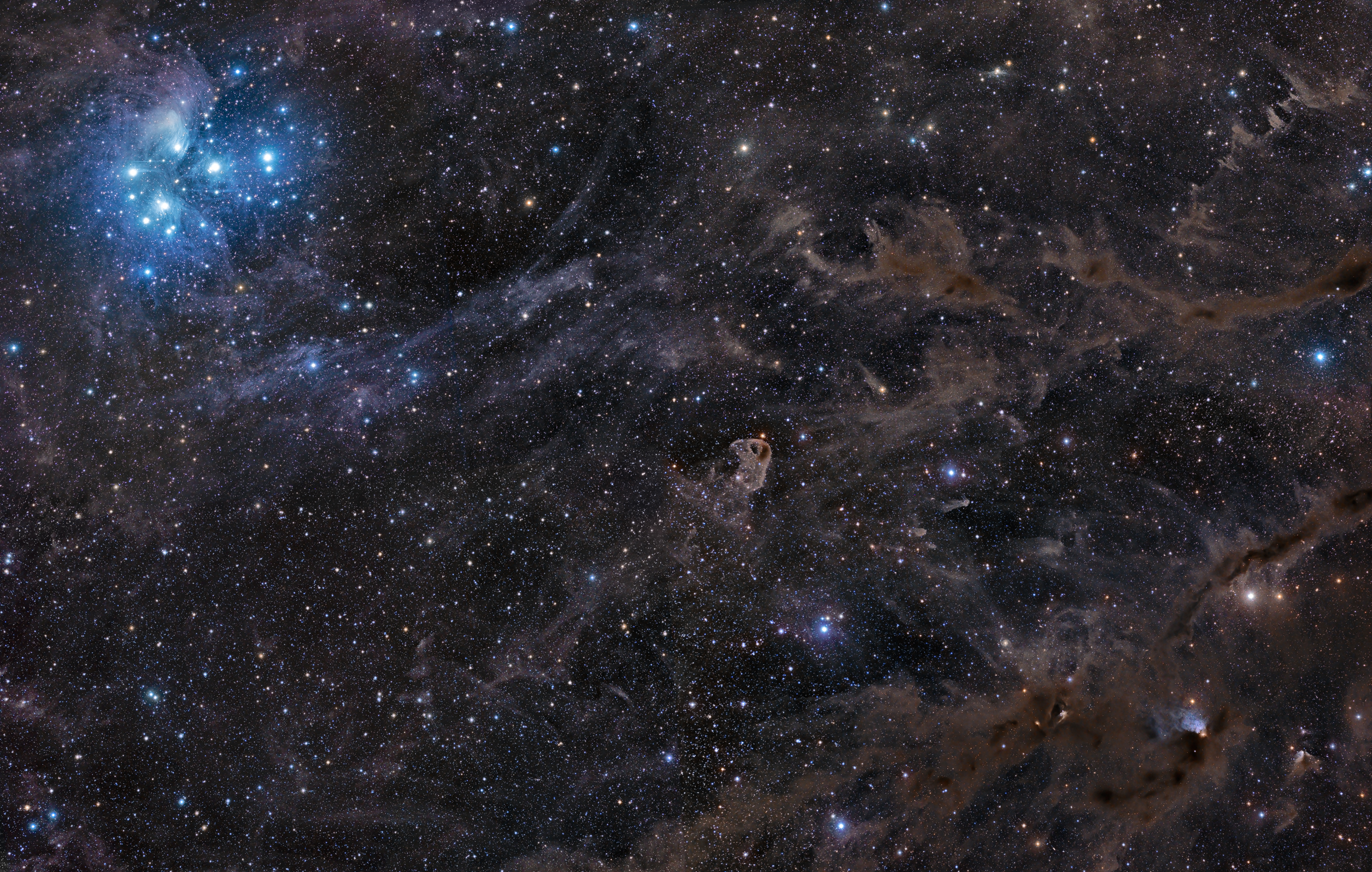
Pictured is Pleiades or Seven Sisters star cluster which is located some 400 light-years away. It is well known for its incredible blue reflection nebulae. This photo shows the sky toward the constellation Taurus and the Orion Arm of the Milky Way. The star cluster is located at the upper left of this photo. But lesser known nebulae are located along this region's molecular cloud. This includes the "bird-like visage" of LBN 777 located near the center. VdB 27 at the lower right is the small bluish reflection nebula. It is associated with the young, variable star RY Tau. At the distanced of the Pleiades, the 5 panel mosaic spans nearly 70 light-years.
Friday, November 12, 2010
Observation 11/11/10
I observed the constellation Cygnus for the Great World Wide Star Count Activity. I made my observation from my front yard around 8 P.M. I found the limiting magnitude to be 5 using the magnitude charts on the activity's website.
APOD 2.3
Pictured is the Iris Nebula and it consists of clouds of interstellar gas and dust that were created 1,300 light-years away in the fertile star fields of the constellation Cepheus. It reminds one of a flower with petals. Within this Iris Nebula, dusty nebular material surrounds a hot, young star. As is seen, the main color of the nebula is blue, which is characteristic of dust grains reflecting starlight. Central filaments of these dusty clouds glow with a "faint reddish photoluminesence" due to the fact that some dust grains convert the star's invisible ultraviolet radiation to visible red light. We have found, using infrared observations, that this nebula may contain complex carbon molecules known as PAHs. The size of the blue portion of the Iris Nebula is about six-light years across.
Friday, November 5, 2010
APOD 2.2
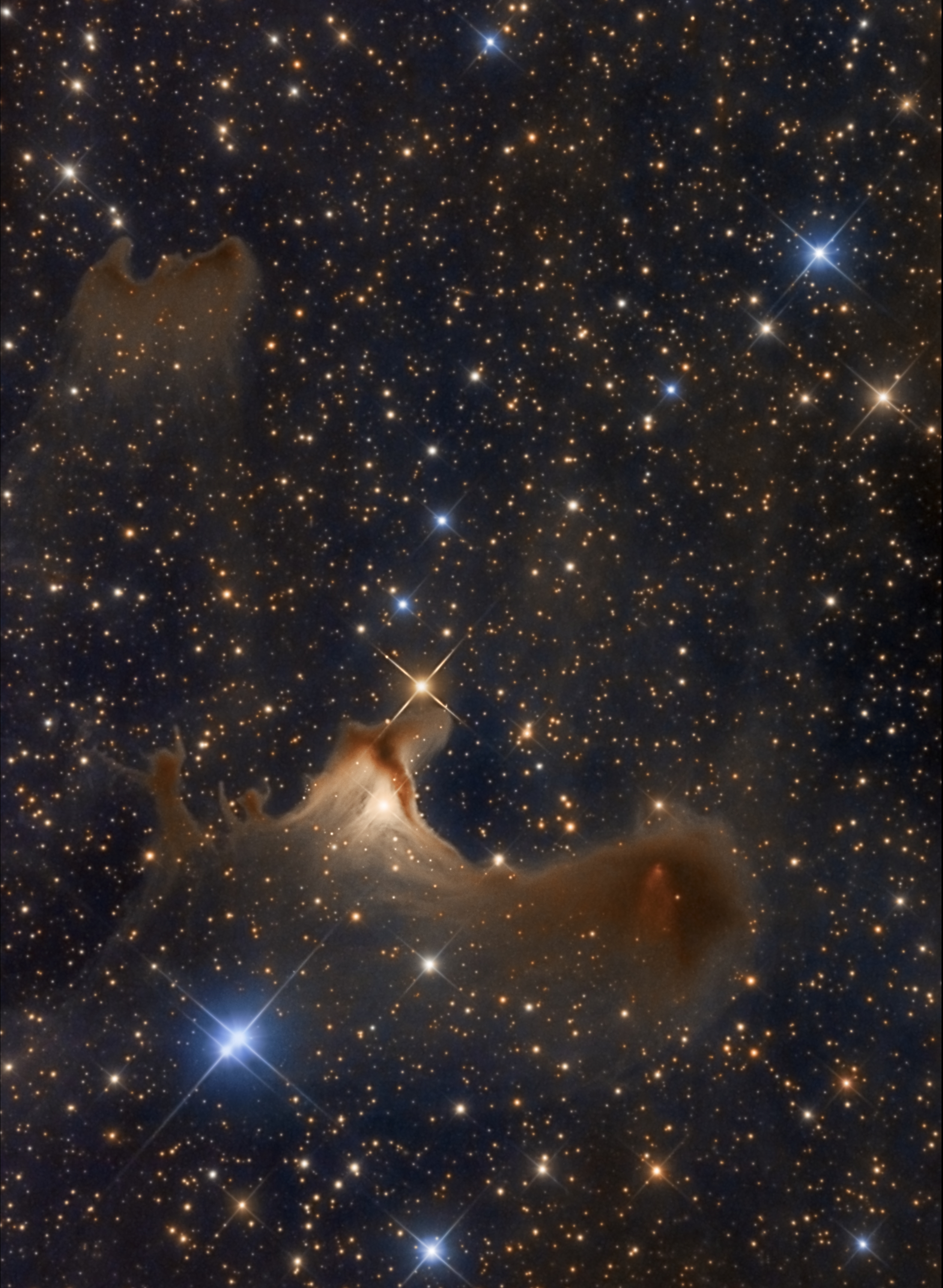
This starry figure, in the constellation Cepheus, seems to be haunted by unknown shapes. These shapes are cosmic dust clouds barely visible in dimly reflected starlight. These are located at the edge of the Cepheus Flare, a molecular cloud complex, which is 1200 light-years away. The molecular clouds of the Cepheus Flare are sites of low and intermediate mass star formation located between 200 and 450 pc from the Sun. Over 2 light-years across the nebula, known as vdB 141 or Sh2-136, is near the center of the field. The core of this dark cloud is collapsing on the right and is likely a binary star system in the early stages of formation.
Thursday, October 28, 2010
APOD 2.1
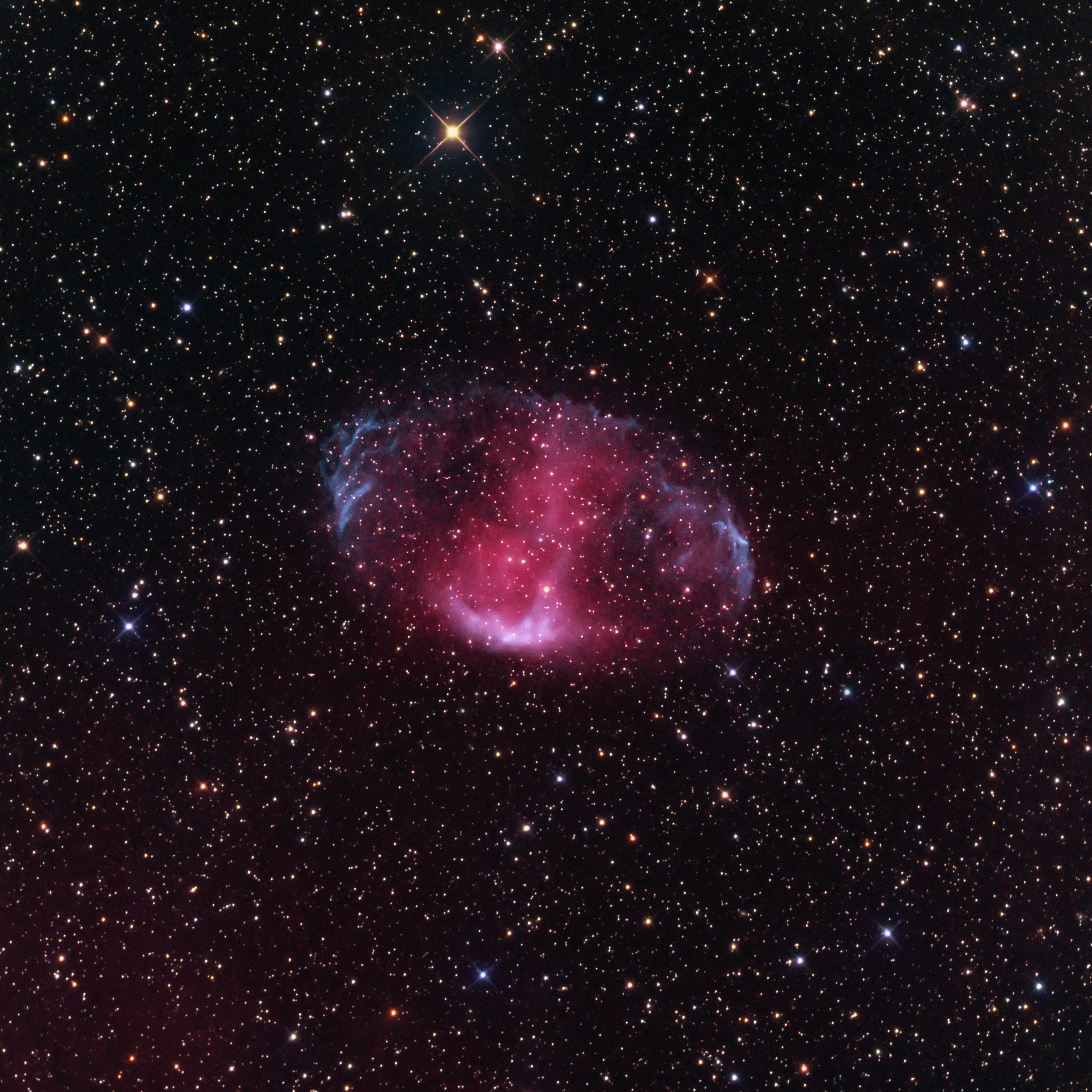
Pictured above is the symmetric planetary nebula called MWP1 and it lies some 4,500 light-years away in the northern constellation Cygnus. It is one of the largest planetary nebulae cataloged and it spans about 15 light-years. It can be determined from its expansion rate that it has an age of 150 thousand years which is a very short time compared to the 10 billion year life of a sun-like star. But these planetary nebulae represent a very short final phase in the process of stellar evolution. It is when the nebula's central star removes its outer layers to become a hot white dwarf. Planetary nebulae usually only last for 10 to 20 thousand years. Consequently, ancients such as MWP1 offer a challenge for astronomers studying the evolution of its central star.
Friday, October 22, 2010
APOD 1.8
Pictured above is a solar prominence. This photo was captured by the Sun-orbiting SOHO satellite earlier this year. This photo was taken during an early stage of the eruption which has quickly become one of the biggest ever on record! The enormity of the prominence can be clearly seen from the photo (the Earth would fit inside!). A solar prominence is defined as a thin cloud of solar gas held just above the surface by the Sun's magnetic field. A quiescent prominence usually lasts for about a month but an eruptive prominence such as the one photographed above may erupt within hours into a Coronal Mass Ejection (CME) which expels hot gas into the Solar System. Although prominences are very hot, they usually appear dark when viewed against the Sun because they are still a little bit cooler than the surface of the Sun. More large eruptive prominences are expected as our Sun evolves toward Solar maximum over the next three years.
Tuesday, October 19, 2010
APOD 1.7
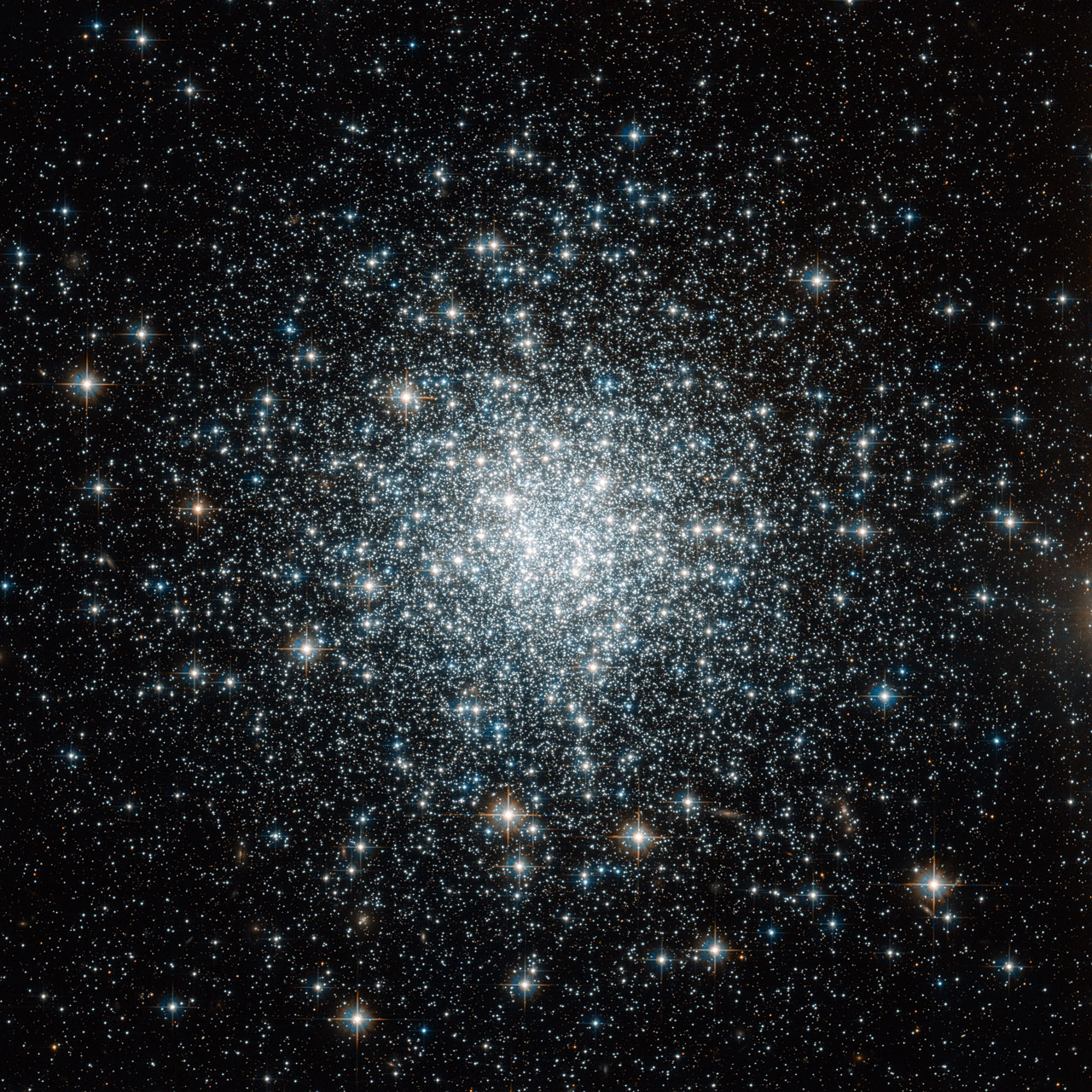
Globular star clusters, ancient spherical groupings of several thousand stars, roam the halo of our Milky Way Galaxy. These globular star clusters are gravitationally bound and older than the stars of the galactic disk. Incredibly, measurements of globular cluster ages appear to be even older than the stars in the Universe. Accurate cluster distance determinations gice us a rung on the astronomical distance ladder. Pictured above is the globular star cluster NGC 6934 and it lies about 5,000 light-years away in the constellation Delphinus. Because of this large distance, we know that this image from Hubble's Advanced Camera for Surveys spans about 50 light-years. Such cluster stars are estimated to be some 10 billion years old.
Sunday, October 17, 2010
Quarter One Astronomer Biography
Quarter One Astronomer
James Bradley was born in Sherborne, Gloucestershire in March of 1693. Bradley was the third son of William Bradley and Jane Pound. James’s parents had always intended for him to have a career in the church; but his uncle had other plans for him. His uncle was the Reverend James Pound, who just so happened to be one of the most promising amateur astronomers of his time. While James’s father’s income was limited, his education was paid for in large part by his uncle. Not only did Bradley’s uncle facilitate his education, he also was one of the main forces driving Bradley’s love of astronomy. Bradley received an education at Northleach Grammar School and at Balliol College , Oxford . He entered Balliol College in 1711, received his B.A. in 1714, and his M.A. in 1717. He was appointed as astronomer royal in 1742 and then Oxford awarded him an honorary D.D.
In 1719, Bradley took orders when he was given his living at Bridstow. Meanwhile, he never ceased his studies in the field of astronomy under the instruction of his uncle. In 1718 he received the honor of being elected as a fellow of the Royal Society. At only 28 years old, he became Savilian professor of astronomy at Oxford and had to resign from his position at Bridstow.
Bradley lived in a time when astronomers were largely on their own when it came to repairing or modifying their equipment. Amazingly, in 1722, Bradley measured the diameter of Venus with a telescope that was over 212 feet in length.
Bradley was very lucky in that he had many connections in the world of astronomy such as his uncle and Samuel Molyneux. Molyneux had an observatory at Kew near London . At this observatory in 1725, Bradley systematically observed the star y Draconis. He was hoping to see the parallactic motion of the stars. His observations did not stray much from what he had predicted: the star described a tiny ellipse with an axis of only 40 seconds of arc. But to his surprise, the direction of the ellipse was wrong! From this, he concluded that the effect did not arise from parallactic motion. Bradley mulled over his findings, he couldn’t figure it out. But then he realized that it was due to the finite velocity of light, owing to the velocity of the earth as it moved in an ellipse, which created an aberration of light. This revelation was so remarkable especially because Bradley gave almost precisely the modern value for the constant of aberration, about 20.5 seconds.
Bradley’s work on aberration lead to his further discoveries. Namely he discovered nutation, the oscillation of the earth’s axis caused by the changing direction of the gravitational pull of the moon on the equatorial bulge. Bradley asserted that nutation must result from the fact that the moon is sometimes above and sometimes below the ecliptic. Therefore, it should have the periodicity of the lunar node. The period from 1727 to 1747, a full cycle of the motion of the moon’s nodes, was covered by his observations.
At Greenwich , he assumed the position of royal astronomer. He obtained an eight foot mural quadrant here, with which he compiled a new catalog of star positions. This wasn’t published until after his death but it involved some 60,000 observations and lead to future research. Bradley’s health began to deteriorate so he was forced to retire to Chalford, Gloucestershire, where he died on July 13, 1762.
Friday, October 8, 2010
APOD 1.6
Shown in this photo are the dark Horsehead Nebula and the glowing Orion Nebula. These are "contrasting comic vistas". They are located 1,500 light-years away in one of the most recognizable constellations in the night sky. The Horsehead Nebula appears as a dark cloud in the lower left hand corner of the photo. The brightest star to the left of the Horsehead is Alnitak, the easternmost star in Orion's belt. The Flame Nebula lies below Alnitak and it has clouds of bright emission and dark dust lanes. The Orion Nebula, known as the emission region, is seen in the upper right hand corner of this photo. To the left lies the "Running Man" which is a bluish reflection nebula. There are tendrils of glowing hydrogen gas that are easily traced throughout the region.
Friday, October 1, 2010
APOD 1.5
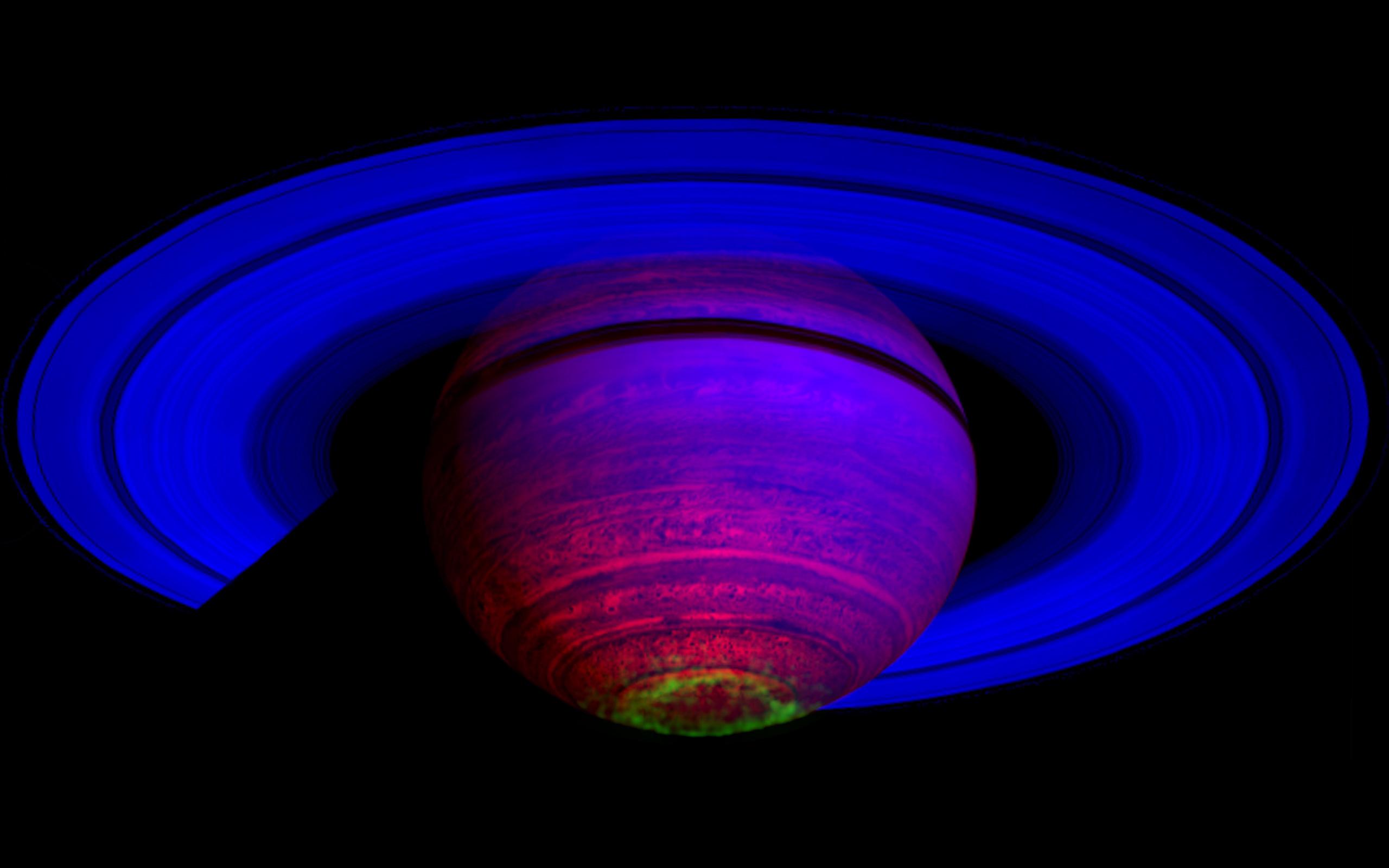
This is a photo of an aurora on Saturn. Scientists have been tirelessly working to try to find out what causes these auroras on Saturn. They have been looking through hundreds of infrared images that were taken by the Cassini spacecraft and trying to compile enough photos of the auroras to make a movie. Some of these movies have shown that these auroras on Saturn can change with the angle of the Sun and as the planet rotates. They have also found that some changes in the aurora are related to waves in the planet's magnetosphere which is most likely a result of Saturn's moons. This particular photo was taken in 2007 and is falsely colored. Nonetheless, it shows Saturn in three bands of infrared light. The rings are reflecting blue sunlight while the planet is glowing in a red lower energy. The green represents the band of southern aurora.
Astronomer Research Sources (Quarter 1)
Dictionary of Scientific Biography. C. Gillispie, editor. Charles Scribner's Son, publisher. 1981
"James Bradley." Encyclopedia of World Biography. 2nd ed. Vol. 2. Detroit: Gale, 2004. 482-483. Gale Virtual Reference Library. Web. 1 Oct. 2010.
Friday, September 24, 2010
Observation 2, September 22, 2010
This observation is from Wednesday, September 22, 2010. I looked up at the sky from my front yard at 8 P.M. The sky was mostly dark but little to no stars were visible as far as I could see because I don't think it was dark enough yet. There were some clouds but not too many. The Moon was in the Full phase and it was bright white in color and was relatively high in the sky. I could see some dark spots on the Moon's surface. I also saw something underneath the Moon and it might have been just a satellite but I thought it could have been Jupiter or some other planet. It appeared too bright to be a star.
APOD 1.4
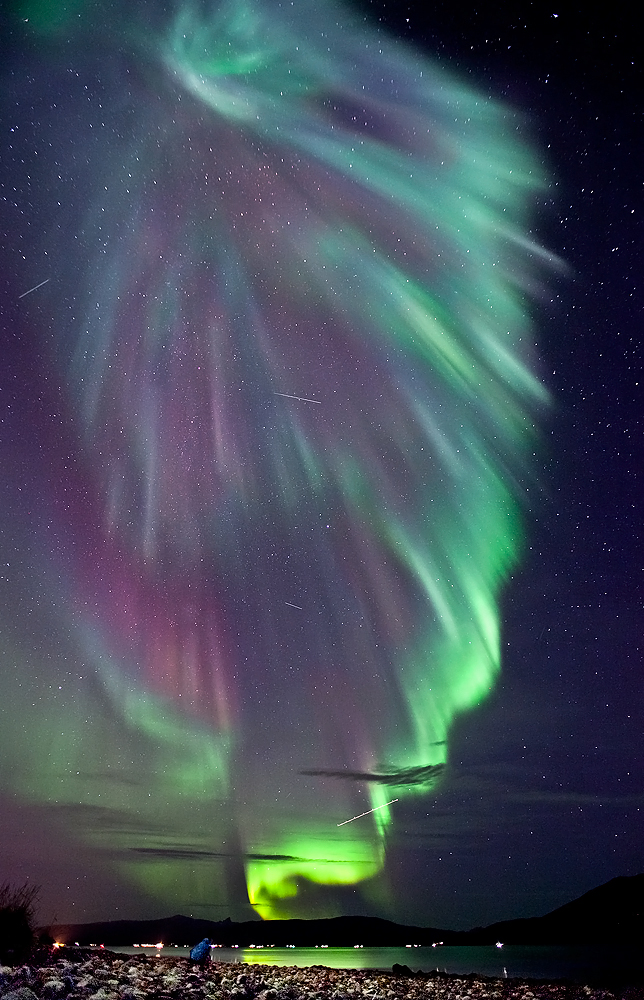
This photo took place in Tromso, Norway. Shown is an aurora which is a spectacular multicolored view in the sky. In more scientific terms, auroras are caused by collisions between charged particles from the magnetosphere and air molecules high in Earth's atmosphere. While they look like moonlit clouds, they only add light to the sky and do not block the stars in the background from being seen. Auroras are often referred to as northern lights in the northern hemisphere. When viewing from space, these auroras appear to glow in X-ray ultraviolet light. Amazingly, some auroras can be predicted. This is possible because they might occur a few days after a powerful magnetic event has been seen on the Sun. I hope to be able to see an aurora at some point in my lifetime because they seem incredible!
Friday, September 17, 2010
Observation 1, 9/11/10
This observation is from September 11th, 2010. I looked up at the sky from my front yard at 9:20 P.M. The sky was relatively clear as far as I could tell and it was completely dark outside. I saw that the Moon was in the waxing crescent phase. I also noticed that it looked very orange and it was very low in the sky. I couldnt see any planets or any other objects in the sky except for the stars.
APOD 1.3
I learned that these filaments of visible shocked, glowing gas, make up what is known as the Veil Nebula. It is seen in the Earth's sky toward the constellation of Cygnus. This nebula is a "large supernova remnant", which means it is an expanding cloud that was created through the death of explosion of a massive star. This explosion of a massive star in our galaxy occurs about every 50 years. What I was shocked to learn was that the light from the original supernova explosion likely reached Earth over 5,000 years ago. The Veil Nebula is also known as the Cygnus Loop and it spans about 3 degrees. This means it is about 6 times the diameter of the Full Moon which fascinates me. The Veil is so large that its brighter parts are recognized as separate nebulae. These include The Witch's Broom, located at the bottom of this photo, and Pickering's Triangle, located towards the bottom of this photo to the right.
Friday, September 10, 2010
APOD 1.2
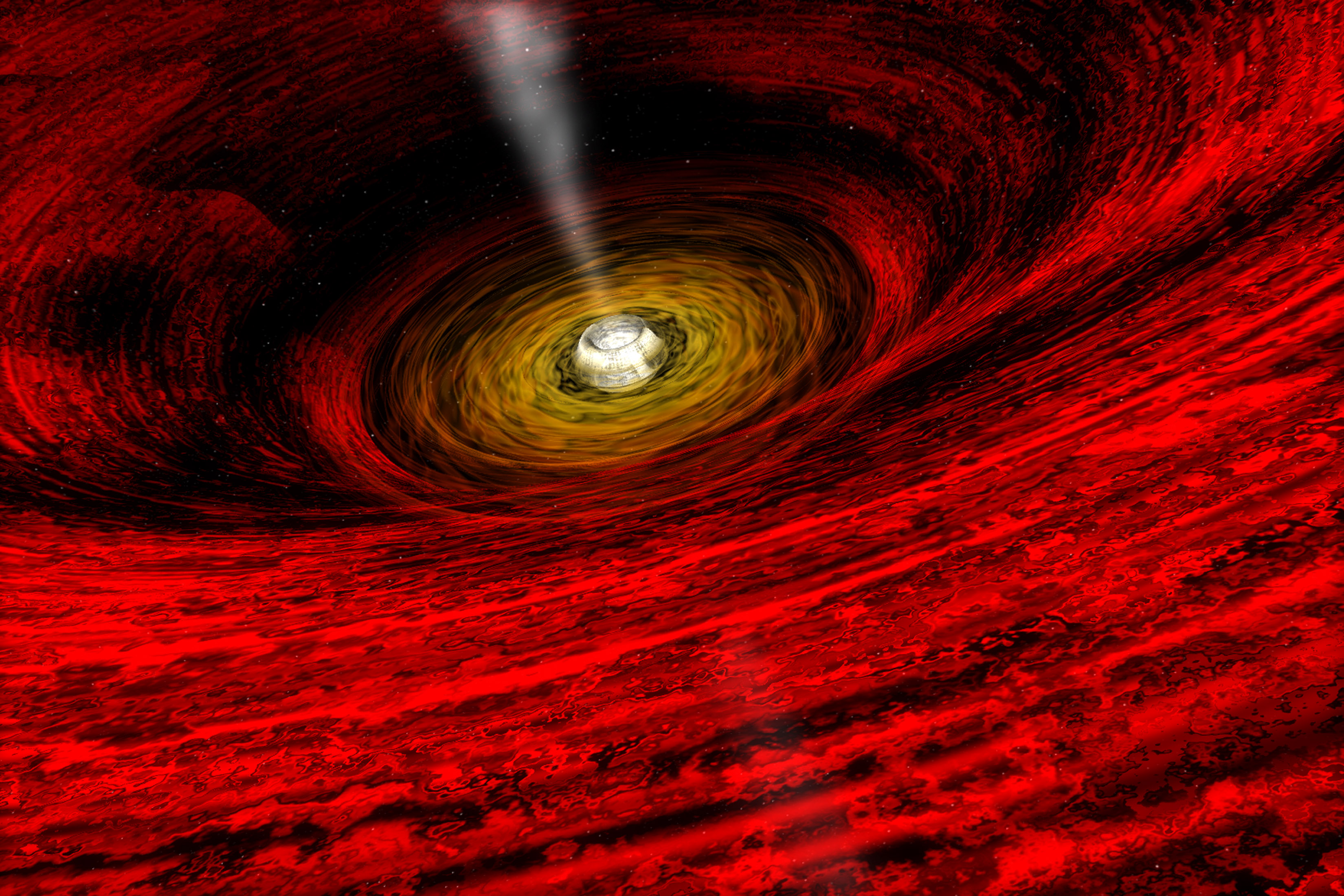
I learned that a black hole has never been seen directly and it is in the center of a swirling whirlpool of hot gas. There is bright light emitted by the swirling gas and it has been studied in detail. Interestingly, studies have shown that the surrounding gas flickers at a rate of 450 times a second. Given its mass, the extremely fast rate of flickering can be explained by a black hole that is rotating amazingly fast. Lastly, I learned that the physical forces that actually cause this flickering have yet to be discovered.
Friday, September 3, 2010
APOD 1.1
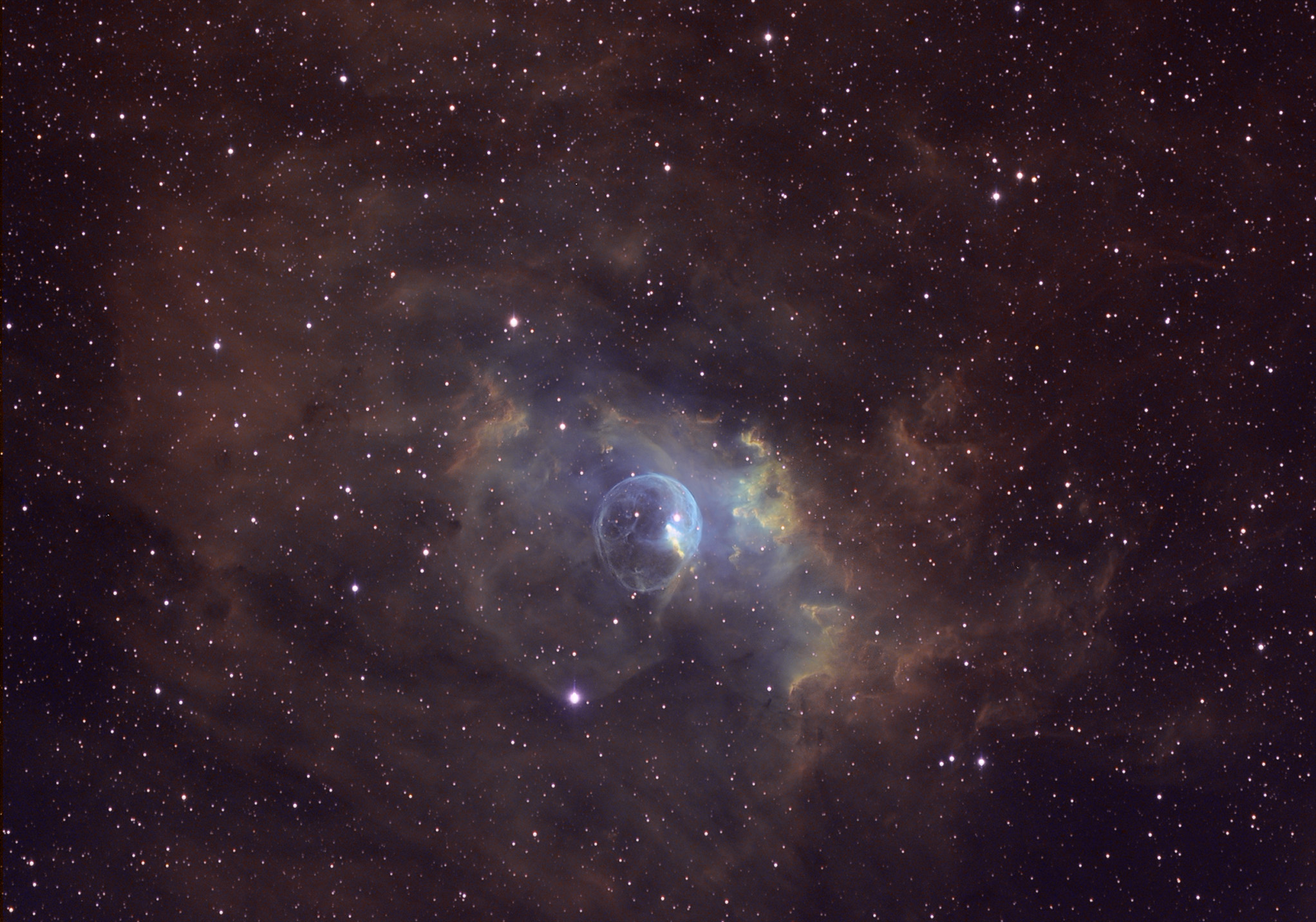
I learned that this fog like substance has the familiar shape of a bubble therefore it was given the scientific name of "The Bubble Nebula". I also learned that while it looks delicate, it is actually 10 light-years in diameter and it is caused by the violent blowing of winds. I also learned that it contains an O-type star which is so hot that it destroys the planet forming disks in other stars The surrounding molecular cloud of the Bubble Nebula is made up of dense gas and dust clouds. Lastly, I learned that the Bubble Nebula lies only 11,000 light-years away toward the constellation Cassiopeia.
Subscribe to:
Comments (Atom)