Kendall, Phebe. "Maria Mitchell." Pine Tree Web Home Page. Web. 22 Feb. 2011. <http://www.pinetreeweb.com/maria-mitchell.htm>.
Quarter 3 Astronomer
Maria Mitchell was born on August 1, 1818 in Nantucket, Massachusetts. Her father was a member of the Quaker religion and he felt strongly that girls should receive education equal to that of boys. At sixteen, Maria was already a teaching assistant to a schoolmaster. At seventeen, she decided to open her own school. She rented a room and put an advertisement in the newspaper. But the school was closed when Maria took a job as the librarian of Nantucket’s Atheneum Library. Maria’s father built an observatory on his room and installed a brand new four inch telescope. He made star observations for the United States Coast Guard and Maria helped her father take these measurements.
Maria was very intelligent and even had the sky memorized. Her observation skills were also impeccable. One night in the Autumn of 1847, Maria looked at the sky through the telescope and saw a star five degrees above the North Star and she knew there hadn’t been a star there before. She thought that it might be a comet so she recorded its coordinates. When she checked again the next night, sure enough, it had moved and she knew it had to be a comet. Her father wrote a letter to Professor William Bond at Harvard University to tell him about Maria’s discovery. The king of Denmark had offered a gold medal to any person who discovers a comet seen only through a telescope. Therefore, Professor Bond submitted Maria’s name to the king. But Father Francesco de Vico of Rome had discovered the comet two days later than Maria and he had been awarded the prize before the news of Maria’s discovery had arrived in Europe. But one year later, it was decided that Maria deserved the award. The comet was named “Miss Mitchell’s Comet.”
Maria continued to work as a librarian but her fame was spreading. She was receiving letters of congratulations from scientists and tourists were coming to take a look at the miraculous woman astronomer. In 1848, she was voted as the first woman member of the American Academy of Arts and Sciences. The same happened with the Association for the Advancement of Science in 1850. In 1849, she took a job with the U.S. Nautical Almanac Office as a computer (the one who does the computations) of tables of positions of the planet Venus. She also started traveling to attend scientific meetings.
In 1856, a rich man named General Swift offered Maria the chance to accompany his daughter Prudence on a trip to the South and to Europe. Maria accepted the offer and took her almanac work with her. Together they went to New Orleans, then to London where Maria got to visit the Greenwich Observatory. Prudence returned to the United States but Maria decided to stay in Europe. She ventured to France on her own and then traveled to Rome with Nathaniel Hawthorne’s family. Her hopes of visiting the Vatican Observatory were dashed when she received the news that women were not admitted. She managed to eventually get special permission but was only granted the right to visit in the daytime. She was never able to look at the stars through the telescope at night. When she got home, she was given a new telescope bought with money raised for women for the first woman astronomer of the United States. She used it to study sunspots and other astronomical events.
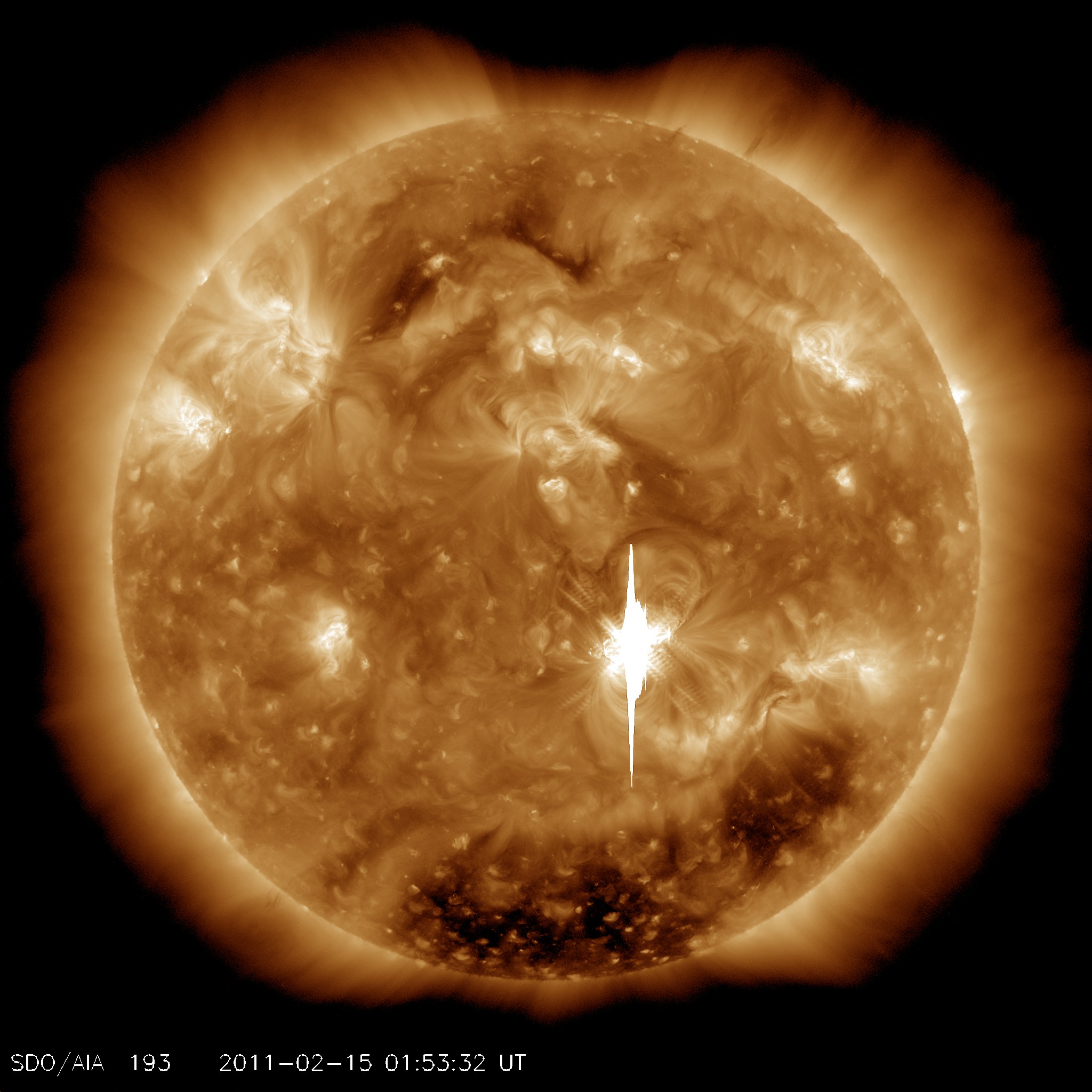
In 1965, she became a professor of astronomy and director of the college observatory at the newly opened Vassar College in Poughkeepsie, New York. There, she had access to a twelve-inch telescope which was the third largest in the United States. She often extended an invitation to her students to come up to the observatory at night and watch meteor showers or other astronomical events. (Sounds a lot like you, Mr. Percival) Maria continues her own research in studying the surface features of Jupiter and Saturn. She was also interested in photographing stars. In 1869, she became the first woman elected to the American Philosophical Society. In 1873, she helped found the American Association for the Advancement if Women and served as its president from 1874 to 1876. In 1873, she attended the first meeting of the Women’s Congress. The Congress also hosted many women’s rights activists such as Elizabeth Cady Stanton, Susan B. Anthony, Lucy Stone, Dr. Elizabeth Blackwell, Antoinette Brown Blackwell, etc.
Maria retired from Vassar in 1888 because of her deteriorating health. She died on June 28, 1889 in Lynn, Massachusetts. The Maria Mitchell Association on Nantucket, founded in 1902, was developed by her friends and supporters after her death. She was elected to the Hall of Fame of Great Americans at New York University (now at Bronx Community College) in 1905. In 19954, she was elected to the National Women’s Hall of Fame in Seneca Falls, New York.