Friday, November 19, 2010
APOD 2.4
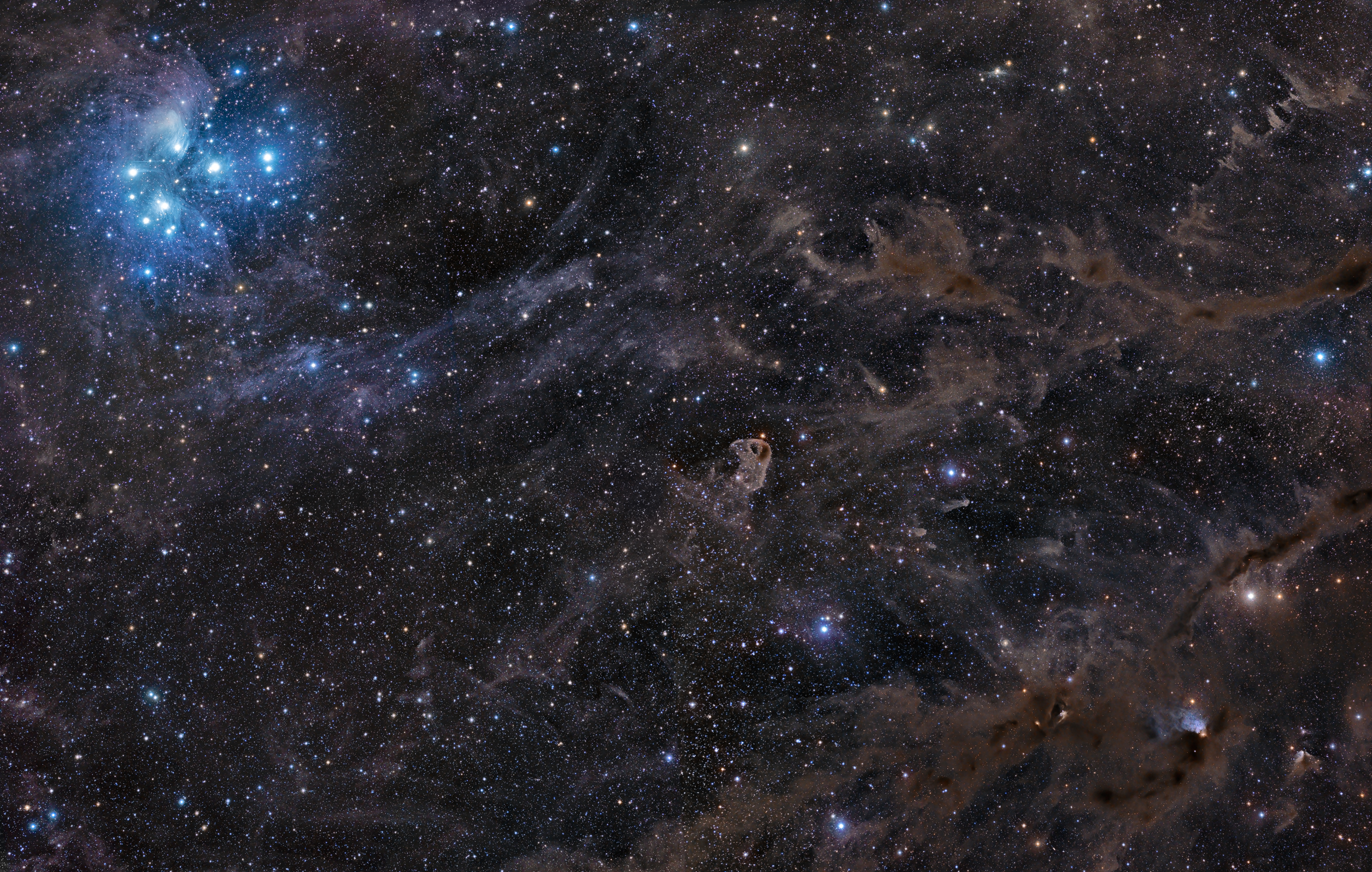
Pictured is Pleiades or Seven Sisters star cluster which is located some 400 light-years away. It is well known for its incredible blue reflection nebulae. This photo shows the sky toward the constellation Taurus and the Orion Arm of the Milky Way. The star cluster is located at the upper left of this photo. But lesser known nebulae are located along this region's molecular cloud. This includes the "bird-like visage" of LBN 777 located near the center. VdB 27 at the lower right is the small bluish reflection nebula. It is associated with the young, variable star RY Tau. At the distanced of the Pleiades, the 5 panel mosaic spans nearly 70 light-years.
Friday, November 12, 2010
Observation 11/11/10
I observed the constellation Cygnus for the Great World Wide Star Count Activity. I made my observation from my front yard around 8 P.M. I found the limiting magnitude to be 5 using the magnitude charts on the activity's website.
APOD 2.3
Pictured is the Iris Nebula and it consists of clouds of interstellar gas and dust that were created 1,300 light-years away in the fertile star fields of the constellation Cepheus. It reminds one of a flower with petals. Within this Iris Nebula, dusty nebular material surrounds a hot, young star. As is seen, the main color of the nebula is blue, which is characteristic of dust grains reflecting starlight. Central filaments of these dusty clouds glow with a "faint reddish photoluminesence" due to the fact that some dust grains convert the star's invisible ultraviolet radiation to visible red light. We have found, using infrared observations, that this nebula may contain complex carbon molecules known as PAHs. The size of the blue portion of the Iris Nebula is about six-light years across.
Friday, November 5, 2010
APOD 2.2
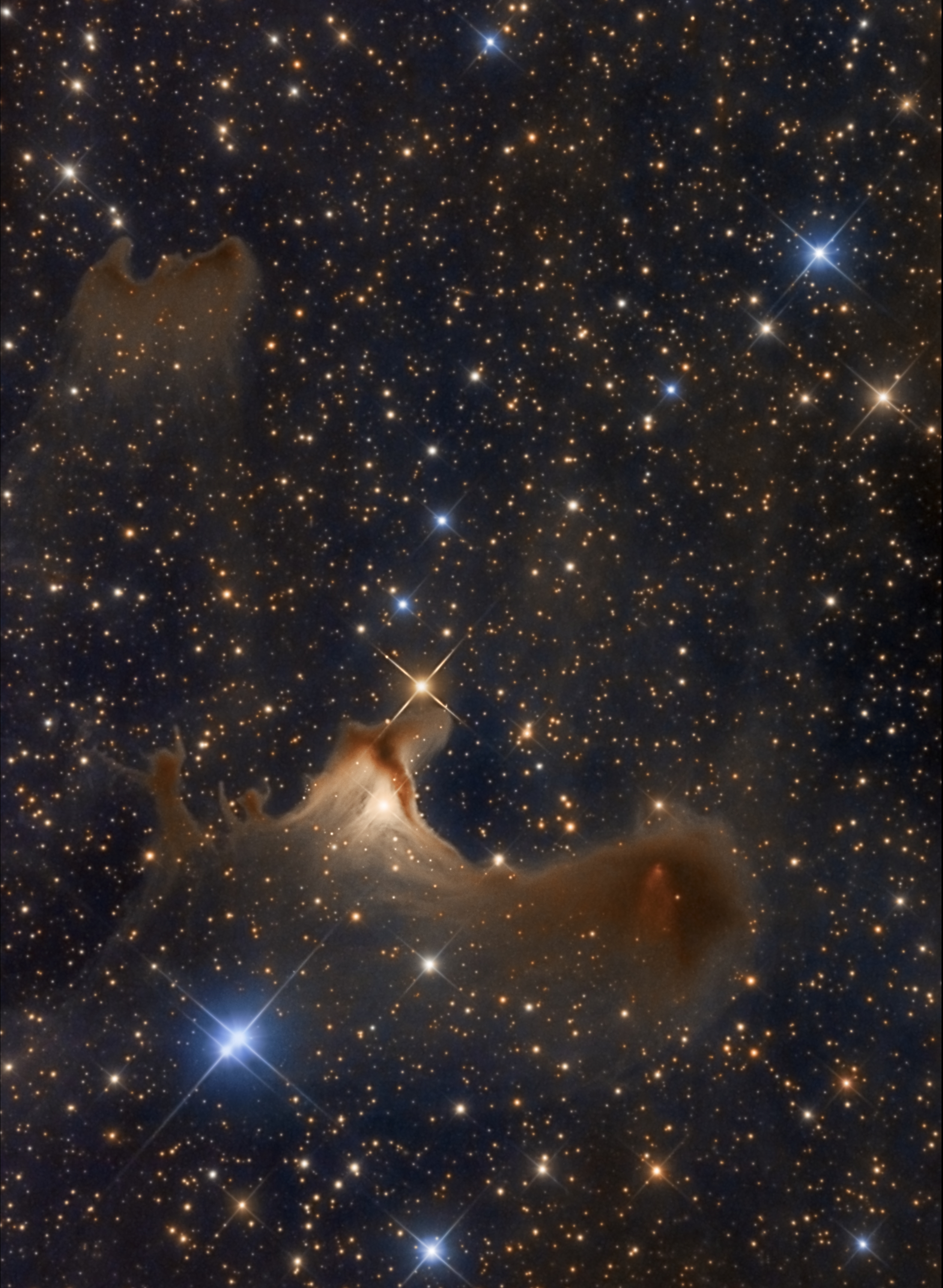
This starry figure, in the constellation Cepheus, seems to be haunted by unknown shapes. These shapes are cosmic dust clouds barely visible in dimly reflected starlight. These are located at the edge of the Cepheus Flare, a molecular cloud complex, which is 1200 light-years away. The molecular clouds of the Cepheus Flare are sites of low and intermediate mass star formation located between 200 and 450 pc from the Sun. Over 2 light-years across the nebula, known as vdB 141 or Sh2-136, is near the center of the field. The core of this dark cloud is collapsing on the right and is likely a binary star system in the early stages of formation.
Subscribe to:
Comments (Atom)