Friday, September 24, 2010
Observation 2, September 22, 2010
This observation is from Wednesday, September 22, 2010. I looked up at the sky from my front yard at 8 P.M. The sky was mostly dark but little to no stars were visible as far as I could see because I don't think it was dark enough yet. There were some clouds but not too many. The Moon was in the Full phase and it was bright white in color and was relatively high in the sky. I could see some dark spots on the Moon's surface. I also saw something underneath the Moon and it might have been just a satellite but I thought it could have been Jupiter or some other planet. It appeared too bright to be a star.

APOD 1.4
Friday, September 17, 2010
Observation 1, 9/11/10
This observation is from September 11th, 2010. I looked up at the sky from my front yard at 9:20 P.M. The sky was relatively clear as far as I could tell and it was completely dark outside. I saw that the Moon was in the waxing crescent phase. I also noticed that it looked very orange and it was very low in the sky. I couldnt see any planets or any other objects in the sky except for the stars.
APOD 1.3

I learned that these filaments of visible shocked, glowing gas, make up what is known as the Veil Nebula. It is seen in the Earth's sky toward the constellation of Cygnus. This nebula is a "large supernova remnant", which means it is an expanding cloud that was created through the death of explosion of a massive star. This explosion of a massive star in our galaxy occurs about every 50 years. What I was shocked to learn was that the light from the original supernova explosion likely reached Earth over 5,000 years ago. The Veil Nebula is also known as the Cygnus Loop and it spans about 3 degrees. This means it is about 6 times the diameter of the Full Moon which fascinates me. The Veil is so large that its brighter parts are recognized as separate nebulae. These include The Witch's Broom, located at the bottom of this photo, and Pickering's Triangle, located towards the bottom of this photo to the right.
Friday, September 10, 2010
APOD 1.2
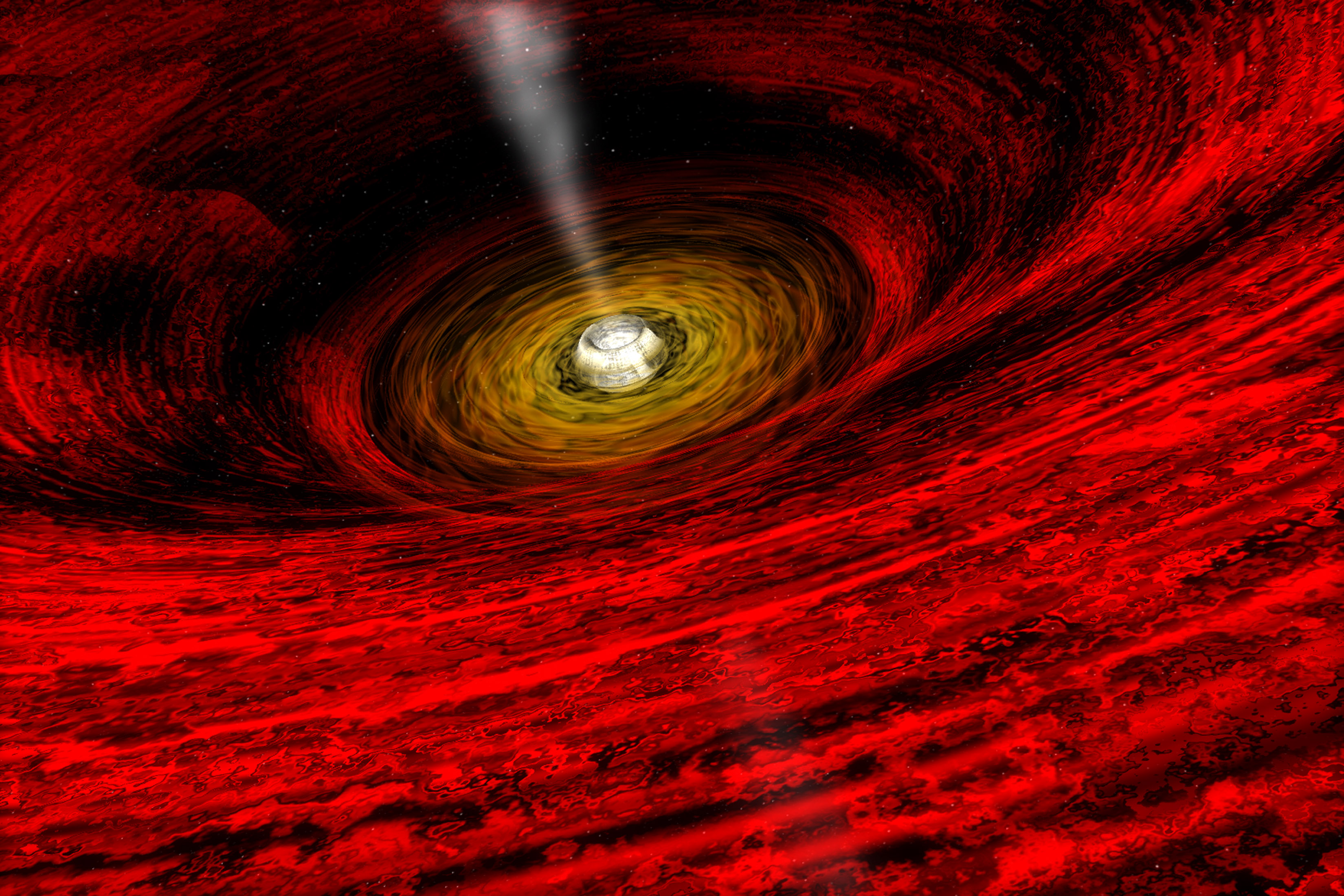
I learned that a black hole has never been seen directly and it is in the center of a swirling whirlpool of hot gas. There is bright light emitted by the swirling gas and it has been studied in detail. Interestingly, studies have shown that the surrounding gas flickers at a rate of 450 times a second. Given its mass, the extremely fast rate of flickering can be explained by a black hole that is rotating amazingly fast. Lastly, I learned that the physical forces that actually cause this flickering have yet to be discovered.

Friday, September 3, 2010
APOD 1.1
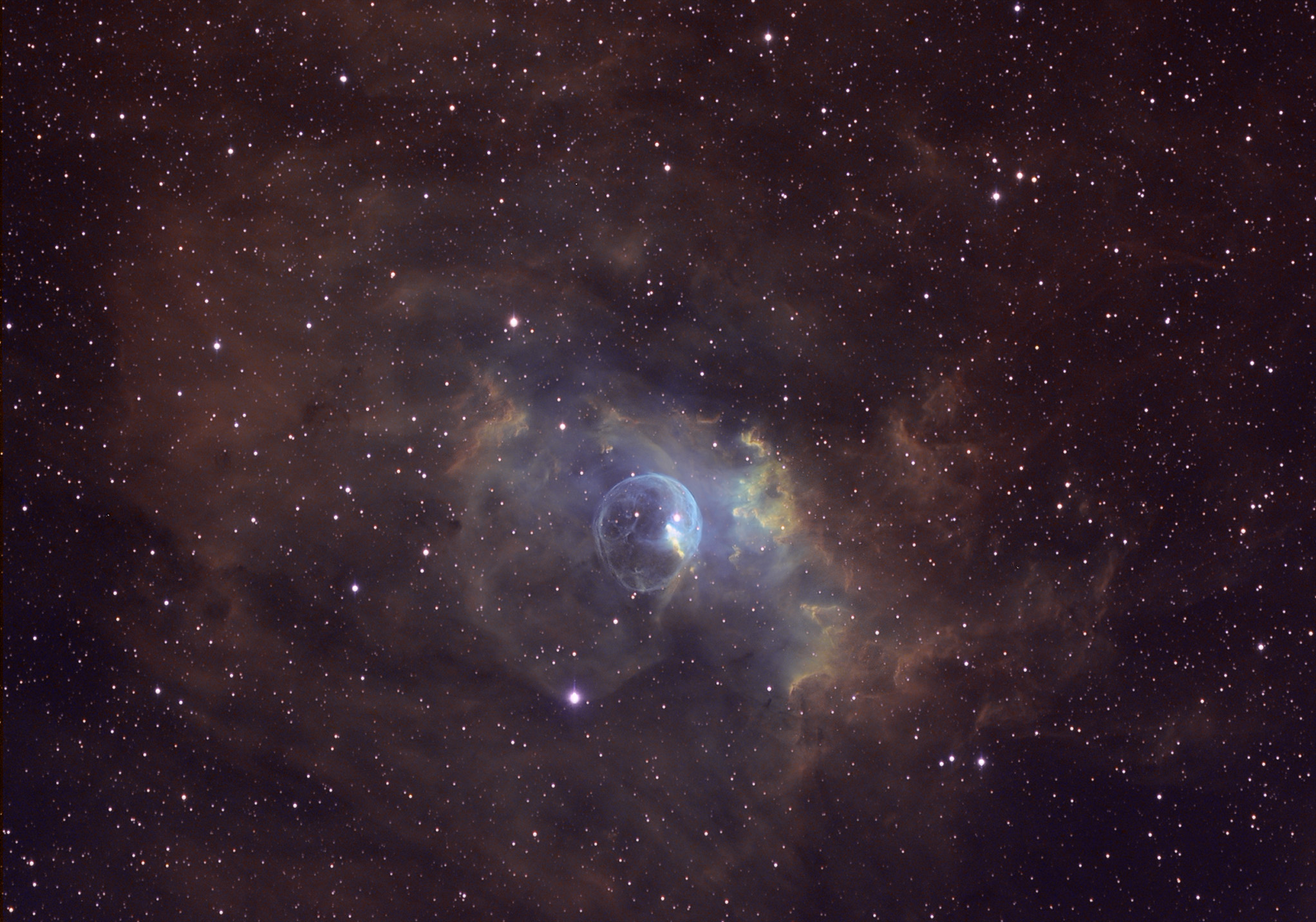
I learned that this fog like substance has the familiar shape of a bubble therefore it was given the scientific name of "The Bubble Nebula". I also learned that while it looks delicate, it is actually 10 light-years in diameter and it is caused by the violent blowing of winds. I also learned that it contains an O-type star which is so hot that it destroys the planet forming disks in other stars The surrounding molecular cloud of the Bubble Nebula is made up of dense gas and dust clouds. Lastly, I learned that the Bubble Nebula lies only 11,000 light-years away toward the constellation Cassiopeia.
Subscribe to:
Comments (Atom)